The most universally recognized symbol for Buddhism is the Dharma Wheel (Dharmachakra), an eight-spoked wheel representing the Noble Eightfold Path to enlightenment. However, Buddhism encompasses numerous sacred symbols, each carrying profound spiritual significance. From the peaceful lotus flower symbolizing purity to the endless knot representing eternal compassion, these symbols form the visual language of Buddhist philosophy. In the United States, where approximately 1.2 percent of the population identifies as Buddhist as of 2026, understanding these symbols provides insight into one of the world’s oldest spiritual traditions.
The Dharma Wheel: Primary Symbol of Buddhism
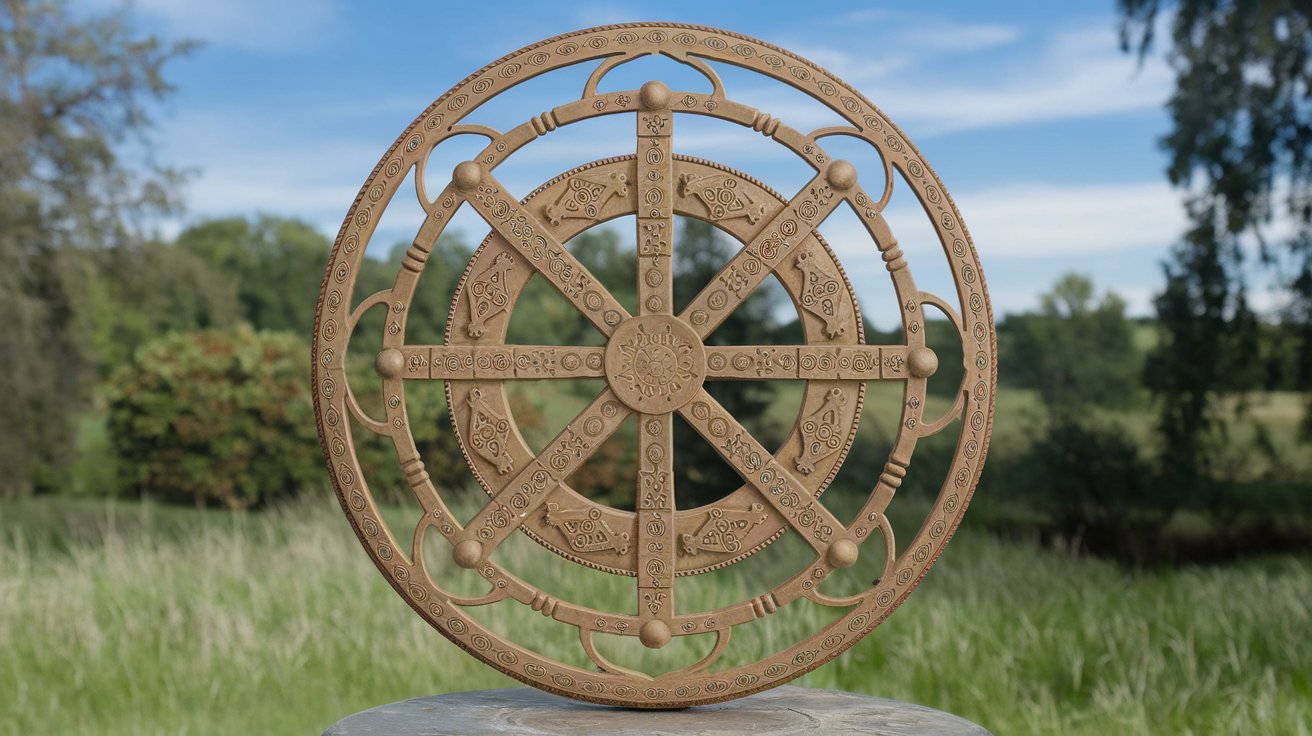
The Dharma Wheel, known as the Dharmachakra in Sanskrit, stands as the most prominent and recognizable symbol for Buddhism worldwide. This circular wheel typically features eight spokes radiating from a central hub, each spoke representing one aspect of the Noble Eightfold Path that Buddha taught as the way to end suffering. The wheel itself symbolizes the continuous cycle of dharma, or Buddhist teaching, and represents Buddha’s first sermon at Deer Park in Sarnath, India, known as “turning the wheel of dharma.”
The eight spokes of the Dharma Wheel correspond to right view, right intention, right speech, right action, right livelihood, right effort, right mindfulness, and right concentration. The rim of the wheel represents the mindfulness that holds together the practice, while the hub signifies moral discipline. In 2026, the Dharma Wheel appears on Buddhist temples, meditation centers, and religious artifacts throughout the United States, from Los Angeles to New York City, where significant Buddhist communities thrive.
The Eight Auspicious Symbols of Buddhism
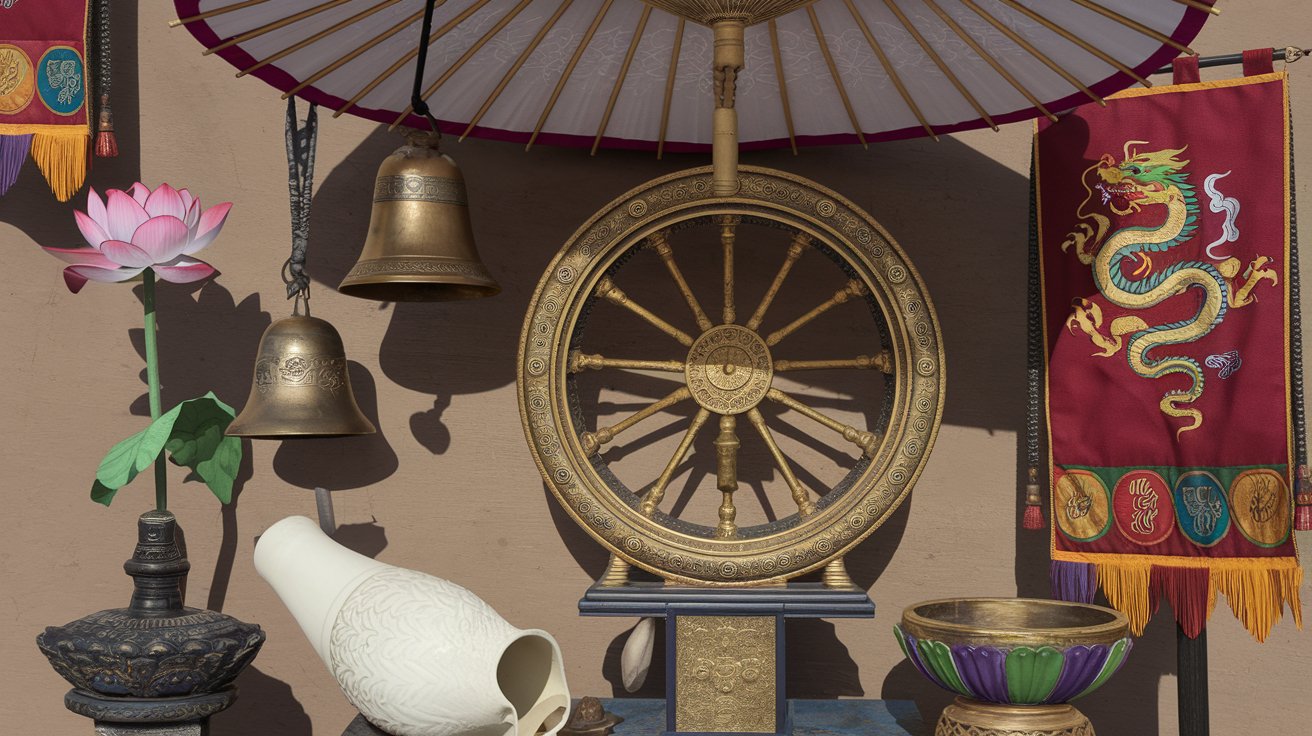
Beyond the Dharma Wheel, Buddhism recognizes eight auspicious symbols (Ashtamangala) that hold deep spiritual meaning and appear frequently in Buddhist art and ceremonies. These eight symbols of Buddhism originated in ancient Indian culture and were adopted into Buddhist iconography to represent different aspects of Buddha’s teachings and the path to enlightenment. Each symbol carries multiple layers of meaning and connects to specific Buddhist principles that practitioners contemplate during meditation and daily practice.
The Lotus Flower: Buddhist Symbol of Life
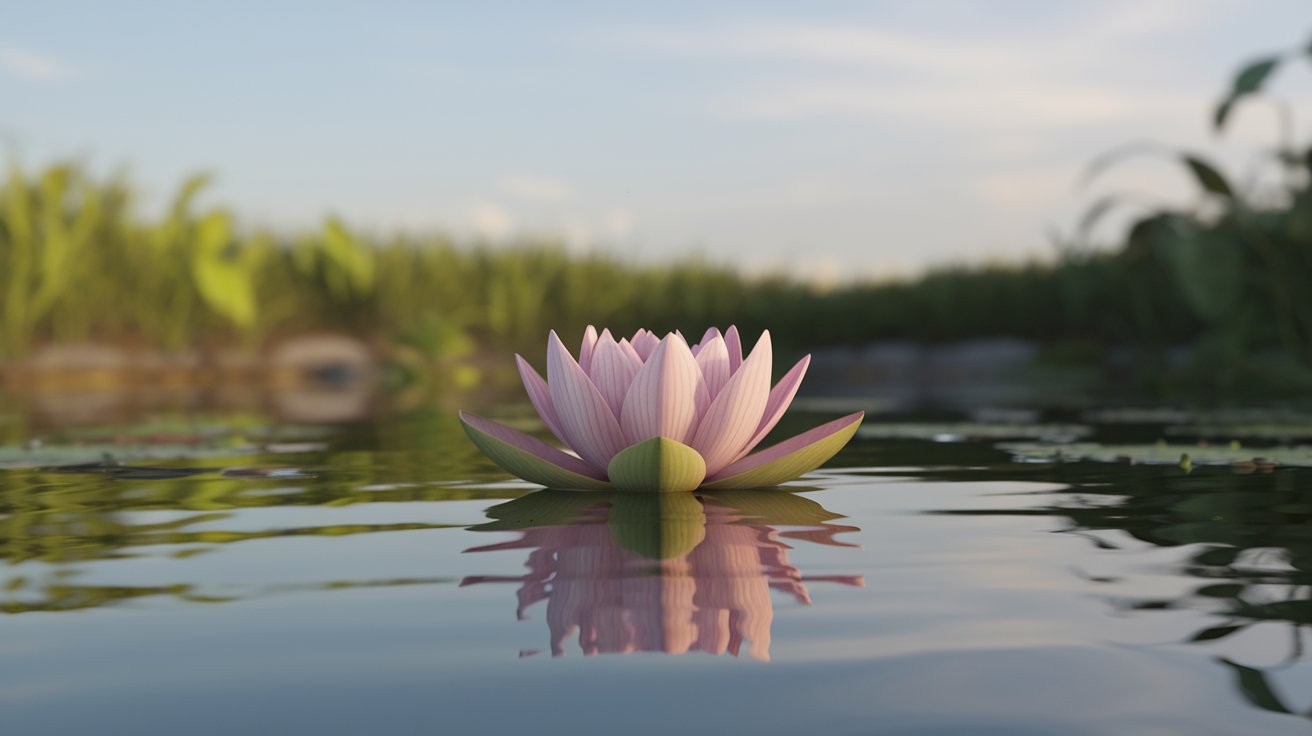
The lotus flower serves as the quintessential Buddhist symbol of life, representing spiritual purity and enlightenment rising from the mud of worldly suffering. This aquatic plant grows through murky water yet blooms pristine and beautiful above the surface, perfectly illustrating the Buddhist journey from ignorance to awakening. Different colored lotus flowers carry specific meanings: white represents mental purity, red symbolizes love and compassion, blue signifies wisdom, and pink represents the Buddha himself.
Throughout the United States in 2026, the lotus symbol appears in Buddhist meditation centers across major cities like San Francisco, which has one of the largest Buddhist populations in America. The lotus frequently decorates altars, prayer beads, and religious artwork, reminding practitioners that enlightenment can emerge from any circumstance, no matter how challenging.
The Endless Knot: Eternal Connection
The endless knot, or eternal knot, displays intertwined lines with no beginning or end, symbolizing the interconnectedness of all existence and the infinite wisdom of Buddha. This geometric pattern represents how all phenomena are interrelated through cause and effect, a fundamental concept in Buddhist philosophy. The endless knot also signifies the union of compassion and wisdom, two essential qualities Buddhists cultivate on their spiritual path.
In contemporary American Buddhist communities, the endless knot appears on jewelry, tattoos, and decorative elements in homes and temples. This symbol resonates particularly with Western practitioners who appreciate its representation of the interconnected nature of reality and the eternal cycle of karma and rebirth.
The Golden Fish: Spiritual Liberation
The pair of golden fish represents freedom from fear and spiritual liberation in Buddhist iconography. Swimming freely in water without drowning, these fish symbolize beings who navigate the ocean of suffering with fearlessness and joy. Originally representing the sacred rivers Ganges and Yamuna in ancient India, the golden fish evolved to signify happiness, fertility, and abundance in the spiritual sense.
This symbol of Buddhism reminds practitioners that just as fish move effortlessly through water, enlightened beings navigate through the cycle of existence without being trapped by attachment or aversion. The golden fish appears in Tibetan Buddhist art and decorations throughout American Buddhist centers, particularly in communities following Tibetan traditions.
The Treasure Vase: Inexhaustible Wealth
The treasure vase, or bumpa in Tibetan, symbolizes inexhaustible spiritual abundance and the fulfillment of both material and spiritual wishes. This rounded vessel contains the nectar of immortality and represents the concept that true wealth comes from spiritual development rather than material accumulation. The vase with a jewel at its opening signifies that spiritual treasures flow endlessly to those who follow the Buddhist path.
In 2026, American Buddhists use the treasure vase symbol in prosperity rituals and as a reminder that developing inner qualities like generosity, compassion, and wisdom creates lasting fulfillment. This symbol appears particularly prominent during Losar (Tibetan New Year) celebrations in cities with significant Tibetan Buddhist populations.
The Victory Banner: Triumph Over Obstacles
The victory banner, traditionally a cylindrical military standard, represents the complete victory of Buddhist teaching over ignorance, death, and spiritual obstacles. This symbol commemorates Buddha’s triumph over Mara, the demon of delusion, on the night of his enlightenment. The banner flying high signifies the elevation of wisdom over ignorance and the victory of knowledge over the forces that keep beings trapped in suffering.
Contemporary Buddhist temples across the United States display victory banners during special ceremonies and teachings, reminding practitioners that obstacles on the spiritual path can be overcome through diligent practice. This symbol particularly resonates with practitioners facing personal challenges, offering inspiration for perseverance.
The Conch Shell: Spreading the Dharma
The white conch shell, spiraling clockwise, symbolizes the beautiful sound of Buddhist teachings spreading throughout the world. Traditionally used as a trumpet in ancient India, the conch represents the awakening of disciples from the slumber of ignorance. Its deep, far-reaching sound signifies how Buddha’s message reaches all corners of existence, calling beings to awaken to their true nature.
In modern American Buddhist practice, the conch shell appears in ritual contexts and as decorative elements representing the spreading of dharma teachings. Many meditation centers in the United States incorporate conch shells into their ceremonial objects, using them to mark the beginning and end of special practices.
The Parasol: Protection and Spiritual Power
The parasol or umbrella represents protection from suffering and harmful forces, symbolizing the spiritual power that shields practitioners from obstacles on the path to enlightenment. Originally indicating royalty and respect in ancient India, the parasol in Buddhism protects against the heat of desire, hatred, and ignorance. Its dome shape represents wisdom, while the hanging skirt symbolizes compassionate methods of teaching.
This symbol of Buddhism appears in temple architecture and religious art throughout American Buddhist centers, often positioned above Buddha statues as a mark of respect and to indicate the protective power of the teachings. The parasol reminds practitioners that dharma provides shelter from the storms of worldly existence.
Simple Buddhist Symbols in Daily Practice
While the eight symbols of Buddhism carry profound meaning, several simple Buddhist symbols have become widely recognized in Western culture and appear frequently in daily spiritual practice. These accessible symbols allow practitioners to connect with Buddhist principles without requiring extensive knowledge of traditional iconography. In 2026, Americans increasingly incorporate these symbols into their homes, jewelry, and meditation spaces as reminders of spiritual values and intentions.
The Om symbol, though shared with Hinduism, appears in Buddhist mantras and represents the sacred sound of the universe. The seated Buddha figure itself has become an iconic symbol of peace and meditation recognized globally. Prayer beads, or mala, consisting of 108 beads, serve as both symbol and tool for mantra recitation. These simple symbols make Buddhist philosophy accessible to the estimated 3 to 4 million Buddhists and Buddhist sympathizers in the United States as of 2026.
Buddhism Symbols and Meanings in Different Traditions
The interpretation and emphasis of Buddhism symbols and meanings vary across different Buddhist traditions practiced in the United States. Theravada Buddhism, prevalent in Southeast Asian communities, emphasizes the Dharma Wheel and the image of the historical Buddha. Mahayana traditions, including Zen and Pure Land Buddhism, incorporate additional symbols like the bodhisattva figures and the enso circle representing enlightenment and wholeness.
Vajrayana or Tibetan Buddhism, which has a significant following in American cities like Boulder, Colorado, and Portland, Oregon, utilizes elaborate symbolic systems including mandalas, vajras (ritual thunderbolts), and the eight auspicious symbols described earlier. Each tradition adapts these symbols to emphasize particular aspects of Buddhist teaching, creating a rich tapestry of visual spiritual language across American Buddhist communities in 2026.
The Five Symbols of Buddhism for Beginners
For those new to Buddhism, understanding the five symbols of Buddhism most commonly encountered provides an accessible entry point to Buddhist philosophy. These essential symbols appear frequently in temples, books, and meditation centers across the United States, offering newcomers immediate connection to core Buddhist concepts. The five symbols typically highlighted for beginners include the Dharma Wheel, lotus flower, Buddha image, Bodhi tree, and the Om symbol.
The Bodhi tree, under which Buddha achieved enlightenment, represents awakening and the potential for spiritual realization within all beings. Many American Buddhist centers plant Bodhi trees or Ficus religiosa on their grounds as living symbols of enlightenment. The Buddha image itself, showing various hand gestures (mudras), communicates different teachings: the meditation mudra represents concentration, while the earth-touching mudra commemorates Buddha’s enlightenment moment. These five symbols provide a foundation for understanding the broader symbolic language of Buddhism.
Buddhism Symbol Photos and Visual Representation
The visual representation of Buddhism symbol photos has evolved significantly in the digital age, with Americans accessing Buddhist iconography through websites, social media, and meditation apps throughout 2026. High-quality images of Buddhist symbols serve educational purposes in temples, university courses on world religions, and personal spiritual practice. Major American Buddhist organizations maintain extensive digital galleries showcasing traditional thangka paintings, modern interpretations, and photographs of symbols in architectural contexts.
Contemporary artists in the United States create innovative interpretations of traditional Buddhist symbols, blending Eastern wisdom with Western aesthetic sensibilities. These modern representations appear in galleries from New York to Los Angeles, making Buddhist philosophy accessible to broader audiences. The proliferation of symbol imagery on platforms like Instagram and Pinterest has introduced millions of Americans to Buddhist visual culture, contributing to increased interest in meditation and mindfulness practices.
Comparing Hinduism Symbol and Buddhism Symbol
While Hinduism symbol and Buddhism symbol systems share historical roots in ancient India, they have evolved distinct meanings and applications. The Om symbol appears in both traditions but carries different significance: in Hinduism, it represents the ultimate reality (Brahman), while in Buddhism, it forms part of the mantra “Om Mani Padme Hum,” representing the path to enlightenment. The lotus flower holds importance in both religions but symbolizes different concepts—spiritual purity in Buddhism and divine beauty in Hinduism.
The swastika, an ancient symbol of auspiciousness, appears in both traditions but has been largely abandoned in Western contexts due to its appropriation by Nazi Germany. In traditional Asian contexts, however, Buddhist temples continue using this symbol in its original spiritual meaning. Understanding these distinctions helps Americans navigate the religious diversity in major cities like Los Angeles, which hosts both the largest Thai Buddhist temple in the United States and substantial Hindu communities.
Buddhism in the United States: Cities and Communities
When considering what US city has the most Buddhists, Los Angeles County leads with an estimated 300,000 to 400,000 Buddhist practitioners as of 2026, representing diverse traditions from Chinese, Vietnamese, Thai, Japanese, Tibetan, and American convert communities. The San Francisco Bay Area ranks second, with approximately 200,000 Buddhists concentrated in cities like San Francisco, Berkeley, and San Jose. New York City’s Buddhist population exceeds 150,000, with significant Chinese, Tibetan, and Korean Buddhist communities throughout the boroughs.
Other cities with substantial Buddhist populations include Honolulu, where Buddhism represents approximately 8 percent of the population due to historical Japanese and Chinese immigration, and Seattle, home to thriving Tibetan and Vietnamese Buddhist communities. These urban centers feature numerous temples displaying the symbols of Buddhism discussed throughout this article, serving both immigrant communities maintaining traditional practices and American converts drawn to Buddhist meditation and philosophy.
Buddhist Practices and Symbols in Daily Life
Understanding what Buddhists do before bed reveals how symbols and practices integrate into daily routines. Many practitioners engage in evening meditation, often focusing on compassion or loving-kindness practices while contemplating Buddhist symbols like the lotus or Dharma Wheel. Some Buddhists recite sutras or mantras, using mala beads as both symbolic reminder and counting tool. Evening practices often include reflection on the day’s actions, examining behavior against Buddhist ethical principles represented by the eight spokes of the Dharma Wheel.
Creating a bedtime shrine with Buddhist symbols provides a focal point for evening practice, helping practitioners transition from daily activities to restful sleep with mindful awareness. In 2026, many American Buddhists use meditation apps featuring Buddhist imagery and guided practices specifically designed for bedtime routines, blending traditional symbols with modern technology to support consistent spiritual practice.
Historical Context: Buddha’s Life and Symbols
Examining what was Buddha’s last meal provides insight into the historical Buddha’s life and the origins of Buddhist symbolism. According to the Mahaparinibbana Sutta, Buddha’s final meal consisted of “sukara-maddava,” a term scholars debate translates either as pork dish or mushroom delicacy, which he received from a blacksmith named Cunda. This meal, consumed around 483 BCE in Pava, India, preceded Buddha’s death and entry into final nirvana (parinirvana).
The circumstances of Buddha’s last meal emphasize Buddhist teachings about impermanence and accepting life’s natural course without attachment. The event has been commemorated in Buddhist art and literature for over 2,500 years, though specific symbols related to the meal remain less common than other aspects of Buddha’s life. Modern Buddhist practitioners focus more on the philosophical lessons—accepting generosity with gratitude and recognizing the temporary nature of physical existence—than on the meal itself.
Buddhism and Modern Health Perspectives
The question of what do Buddhists say about dementia reflects growing interest in how Buddhist philosophy addresses cognitive decline and end-of-life issues in aging American populations. Buddhist teachings emphasize that consciousness exists beyond cognitive function, suggesting that even when memory and recognition fail, the fundamental awareness or “Buddha nature” remains intact. Dementia challenges practitioners and caregivers to apply compassion, patience, and non-attachment—core Buddhist values symbolized by the lotus rising from mud.
In 2026, several American Buddhist centers have developed specialized programs supporting individuals with dementia and their caregivers, applying mindfulness techniques to reduce anxiety and maintain quality of life. Buddhist perspectives on impermanence help families accept cognitive changes as part of the natural cycle represented by the Dharma Wheel. The emphasis on present-moment awareness, symbolized throughout Buddhist iconography, offers practical approaches to connecting with individuals experiencing memory loss, focusing on emotional presence rather than cognitive recognition.
Related video about what is the symbol for buddhism
This video complements the article information with a practical visual demonstration.
Everything you need to know about what is the symbol for buddhism
What is the most important symbol in Buddhism?
The Dharma Wheel (Dharmachakra) is considered the most important and universally recognized symbol in Buddhism. This eight-spoked wheel represents Buddha’s first teaching and the Noble Eightfold Path to enlightenment. The wheel symbolizes the continuous turning of dharma, or Buddhist teaching, and appears on Buddhist flags, temples, and religious artifacts worldwide. Each of the eight spokes corresponds to a specific aspect of Buddhist practice: right view, right intention, right speech, right action, right livelihood, right effort, right mindfulness, and right concentration. The Dharma Wheel serves as a visual reminder of the complete path Buddha taught for ending suffering.
What are the 8 auspicious symbols of Buddhism and what do they mean?
The eight auspicious symbols of Buddhism (Ashtamangala) are: the Dharma Wheel (Buddha’s teachings), the lotus flower (spiritual purity), the endless knot (interconnection), the golden fish (liberation), the treasure vase (spiritual abundance), the victory banner (triumph over ignorance), the conch shell (spreading dharma), and the parasol (protection). These symbols originated in ancient India and were incorporated into Buddhist iconography to represent different aspects of the path to enlightenment. Each symbol carries multiple layers of meaning and appears frequently in Buddhist art, ceremonies, and temple decorations throughout the United States and worldwide. Practitioners contemplate these symbols during meditation to deepen understanding of Buddhist principles.
What US city has the most Buddhists in 2026?
Los Angeles County has the most Buddhists in the United States as of 2026, with an estimated 300,000 to 400,000 practitioners representing diverse traditions including Chinese, Vietnamese, Thai, Japanese, Tibetan, and American convert communities. The San Francisco Bay Area ranks second with approximately 200,000 Buddhists, followed by New York City with over 150,000. Honolulu has the highest percentage of Buddhists relative to population at approximately 8 percent, due to historical Japanese and Chinese immigration. These cities feature numerous Buddhist temples and meditation centers displaying traditional symbols and serving both immigrant communities and American converts interested in Buddhist meditation and philosophy.
What does the lotus flower symbolize in Buddhism?
The lotus flower symbolizes spiritual purity, enlightenment, and rebirth in Buddhism, serving as the primary Buddhist symbol of life. This aquatic plant grows through murky water yet blooms pristine above the surface, perfectly representing the Buddhist journey from ignorance to awakening. Different colored lotus flowers carry specific meanings: white represents mental purity and spiritual perfection, red symbolizes love and compassion, blue signifies wisdom and knowledge, and pink represents the historical Buddha himself. The lotus appears throughout Buddhist art, decorates altars and prayer beads, and reminds practitioners that enlightenment can emerge from any circumstance, no matter how challenging, just as the beautiful lotus rises from muddy waters.
How do Buddhist symbols differ from Hindu symbols?
While Buddhist and Hindu symbols share historical roots in ancient India, they carry distinct meanings and applications. The Om symbol appears in both traditions but represents ultimate reality (Brahman) in Hinduism, while forming part of Buddhist mantras like “Om Mani Padme Hum.” The lotus flower holds importance in both religions but emphasizes spiritual purity in Buddhism versus divine beauty in Hinduism. Buddhism uniquely features the Dharma Wheel, representing Buddha’s teachings, while Hinduism emphasizes symbols like the trident of Shiva and the tilaka mark. The swastika, though ancient and auspicious in both traditions, has been largely abandoned in Western contexts. Understanding these distinctions helps navigate religious diversity in multicultural American cities.
What do Buddhists do before bed as part of their practice?
Many Buddhists engage in evening meditation before bed, often focusing on compassion or loving-kindness practices while contemplating Buddhist symbols like the lotus or Dharma Wheel. Common bedtime practices include reciting sutras or mantras using mala beads, reflecting on the day’s actions against Buddhist ethical principles, and cultivating gratitude. Some practitioners create bedtime shrines with Buddhist symbols as focal points for evening practice, helping transition from daily activities to restful sleep with mindful awareness. In 2026, many American Buddhists use meditation apps featuring Buddhist imagery and guided practices designed specifically for bedtime routines, blending traditional symbols with modern technology to support consistent spiritual practice and peaceful sleep preparation.
| Buddhist Symbol | Primary Meaning | Spiritual Benefit |
|---|---|---|
| Dharma Wheel | Noble Eightfold Path and Buddha’s teachings | Complete roadmap to enlightenment |
| Lotus Flower | Spiritual purity rising from suffering | Inspiration that enlightenment is possible |
| Endless Knot | Interconnection and eternal wisdom | Understanding cause and effect |
| Golden Fish | Freedom from fear and liberation | Fearless navigation through life |
| Conch Shell | Spreading Buddha’s teachings | Awakening from ignorance |