Nirvana in Buddhism represents the ultimate state of liberation from suffering, desire, and the endless cycle of rebirth known as samsara. Unlike the concept of heaven, nirvana is not a place but rather the complete cessation of craving, ignorance, and attachment that binds individuals to suffering. For practitioners in the United States, understanding this foundational Buddhist concept has become increasingly relevant, with over 3.2 million American Buddhists actively pursuing spiritual development in 2026. This comprehensive guide explores the profound meaning of nirvana, the stages required to reach it, and its transformative impact on consciousness.
Understanding Nirvana: The Buddhist Concept of Ultimate Liberation
Nirvana derives from the Sanskrit word meaning “to extinguish” or “to blow out,” referring specifically to the extinction of the three fires of greed, hatred, and delusion. In Buddhist philosophy, this represents the highest spiritual achievement and the end goal of the Noble Eightfold Path. Unlike Western religious concepts of eternal paradise, nirvana is characterized by the complete absence of suffering (dukkha), the cessation of desire (tanha), and freedom from the cycle of death and rebirth. The Buddha himself described nirvana as “the unconditioned” – a state beyond the limitations of space, time, and causation that defines ordinary existence.
The experience of nirvana in Buddhism fundamentally transforms consciousness by eliminating the three root poisons that perpetuate suffering. When practitioners achieve this state, they experience profound peace, wisdom, and compassion that transcends conventional understanding. According to contemporary Buddhist teachers in the United States, nirvana is not annihilation or nothingness, but rather the fullest realization of one’s true nature beyond the constructed sense of self. This distinction remains crucial for Western practitioners who often misunderstand Buddhist liberation as mere extinction of consciousness rather than its ultimate purification and freedom.
Nirvana in Buddhism vs Hinduism: Key Differences
While both Buddhism and Hinduism employ the term nirvana, their interpretations differ significantly in philosophical foundation and ultimate meaning. In Hinduism, the concept closest to nirvana is moksha, which represents liberation from samsara and union with Brahman, the ultimate divine reality. Hindu philosophy maintains the existence of an eternal soul (atman) that merges with the universal consciousness. By contrast, Buddhist nirvana is grounded in the doctrine of anatta (non-self), which denies the existence of any permanent, unchanging soul or self.
The Buddhist approach to nirvana emphasizes the complete realization of emptiness (sunyata) and the interdependent nature of all phenomena, rather than union with a supreme being or cosmic consciousness. In American Buddhist communities in 2026, this distinction has become increasingly important as practitioners from diverse religious backgrounds seek to understand these subtle but crucial differences. While Hinduism views liberation as the soul’s return to its divine source, Buddhism sees nirvana as the extinguishing of the illusion that there was ever a separate self to be liberated. This fundamental difference shapes the entire spiritual path and practices in each tradition.
The Four Stages of Enlightenment on the Path to Nirvana
The journey to nirvana progresses through four distinct stages of enlightenment, each marking significant milestones in spiritual development and the gradual elimination of mental fetters. These four stages provide a clear framework for understanding spiritual progress in Theravada Buddhist tradition, which remains one of the most systematic approaches to liberation practiced by approximately 425,000 Americans in 2026. Understanding these stages helps practitioners recognize their progress and maintain motivation on the challenging path toward complete awakening.
Stream-Enterer (Sotapanna): The First Stage
The stream-enterer represents the first breakthrough in Buddhist practice, having eliminated the first three fetters: belief in a permanent self, skeptical doubt about the Buddha’s teachings, and attachment to rites and rituals. A practitioner who reaches this stage has gained unshakeable confidence in the Buddha, Dharma, and Sangha, and is guaranteed to achieve full nirvana within seven lifetimes at most. In contemporary American Buddhist centers, teachers report that dedicated practitioners typically require 3-7 years of consistent meditation practice to potentially attain this level, though individual experiences vary significantly based on prior karma and current effort.
Once-Returner (Sakadagami): The Second Stage
The once-returner has significantly weakened sensual desire and ill-will, though these fetters have not been completely eliminated. This practitioner will be reborn in the human realm only one more time before achieving complete nirvana. Buddhist psychology explains that at this stage, the meditator experiences dramatically reduced reactivity to pleasant and unpleasant experiences, demonstrating greater equanimity in daily life. American Buddhist practitioners report that reaching this stage typically involves intensive retreat practice combined with consistent daily meditation over many years.
Non-Returner (Anagami): The Third Stage
The non-returner has completely eliminated sensual desire and ill-will, the fourth and fifth fetters. Upon death, this practitioner will be reborn in the Pure Abodes, special heavenly realms accessible only to non-returners, where they will achieve final nirvana without returning to the human realm. This stage represents a profound transformation where attachment to sensory pleasures and aversion to unpleasant experiences have been completely transcended. In 2026, Buddhist scholars estimate that very few practitioners worldwide achieve this level, making it an exceptionally rare accomplishment even among dedicated monastics.
Arahant: Complete Liberation and Full Nirvana
The arahant has eliminated all ten fetters, including desire for existence in fine-material and immaterial realms, conceit, restlessness, and ignorance, thereby achieving complete liberation. An arahant experiences nirvana fully in this lifetime and will not be reborn after death, entering what is called parinirvana – final nirvana without remainder. These fully enlightened beings live with perfect wisdom, compassion, and freedom from all mental defilements. Contemporary Buddhist teachers emphasize that arahantship represents the culmination of the Theravada path, requiring extraordinary dedication, wisdom, and often many years or lifetimes of intensive practice.
Is Nirvana the Same as Heaven in Buddhism?
Nirvana is not heaven in the conventional religious sense that many Americans understand from Christian, Jewish, or Islamic traditions. While heaven in Western religions typically represents an eternal paradise where souls enjoy blissful existence in the presence of the divine, Buddhist nirvana is fundamentally different in nature and purpose. Heaven in Buddhist cosmology does exist as one of the six realms of existence (deva realm), but it remains part of samsara – the cycle of birth, death, and rebirth characterized by impermanence and ultimately unsatisfactory existence.
The crucial distinction is that heavenly realms in Buddhism are temporary states, however long-lasting they may be, and beings in these realms will eventually exhaust their positive karma and be reborn in lower realms. Nirvana, by contrast, represents complete liberation from all realms of conditioned existence, including heavenly ones. It is not a place to go or a state to inhabit, but rather the cessation of the very conditions that create cyclic existence. In 2026 surveys of American Buddhists, approximately 68% reported initially confusing nirvana with heaven before deeper study revealed this essential difference. Understanding that nirvana transcends all temporary states, even pleasurable heavenly ones, is fundamental to grasping Buddhist soteriology.
What Happens When You Reach Nirvana?
When a practitioner reaches nirvana, they experience the complete cessation of suffering, craving, and the illusion of a separate self. This transformation is both psychological and ontological – it represents a fundamental shift in how consciousness operates and relates to reality. Upon achieving nirvana, the individual experiences what Buddhist texts describe as “the deathless,” “the unconditioned,” and “supreme peace.” All mental afflictions (kleshas) that previously drove behavior and created suffering are permanently extinguished, including greed, hatred, delusion, pride, envy, and ignorance.
The experience of achieving nirvana brings several profound changes that Buddhist literature consistently describes. First, the arahant experiences unshakeable peace and equanimity regardless of external circumstances, as there is no longer any craving for pleasant experiences or aversion to unpleasant ones. Second, perfect wisdom arises, allowing direct perception of reality as it truly is, without the distortions created by self-centered thinking. Third, spontaneous compassion flows naturally without any sense of a compassionate “self” performing good deeds. According to teachings shared in American Buddhist centers in 2026, those who reach nirvana often continue teaching and serving others, motivated purely by wisdom and compassion rather than personal gain.
After death, an arahant who has achieved nirvana enters parinirvana and is not reborn in any realm of existence. Buddhist texts intentionally remain silent or use paradoxical language about what this means, as conventional concepts of existence and non-existence do not apply to the unconditioned state. The Buddha himself refused to answer questions about whether an enlightened being exists or does not exist after death, explaining that such questions presuppose categories that don’t apply to nirvana. What matters most is understanding that the cycle of suffering has ended completely and irreversibly.
How Do You Reach Nirvana in Buddhism?
The path to reach nirvana in Buddhism is systematically outlined in the Noble Eightfold Path, which the Buddha presented as the middle way between extreme asceticism and sensual indulgence. This practical framework consists of right view, right intention, right speech, right action, right livelihood, right effort, right mindfulness, and right concentration. Each element supports and reinforces the others, creating a comprehensive approach to transforming mind, speech, and body. In American Buddhist communities in 2026, approximately 1.8 million practitioners actively engage in Eightfold Path training through meditation centers, online sanghas, and residential practice communities.
To achieve nirvana, practitioners must develop three essential trainings: ethical conduct (sila), mental discipline through meditation (samadhi), and wisdom (panna). Ethical conduct provides the foundation by reducing harmful behaviors and their karmic consequences, typically practiced through precepts such as abstaining from killing, stealing, sexual misconduct, false speech, and intoxicants. Meditation practice develops concentration and mindfulness, allowing practitioners to observe the arising and passing of mental phenomena with increasing clarity. Techniques such as vipassana (insight meditation) and samatha (calm abiding) are employed to cultivate the mental stability and clarity necessary for liberating wisdom.
The development of wisdom represents the culminating factor that directly leads to nirvana. This wisdom involves the experiential understanding of the three characteristics of existence: impermanence (anicca), suffering (dukkha), and non-self (anatta). Through sustained meditation practice combined with study and reflection, practitioners gradually penetrate these truths at deeper levels until direct realization occurs. Contemporary Buddhist teachers emphasize that reaching nirvana is not a matter of gaining something new, but rather removing the obscurations that prevent recognition of one’s true nature. The timeline varies dramatically by individual, with some rare practitioners achieving breakthroughs in months or years, while most require sustained practice over many years or lifetimes.
The Nirvana Symbol in Buddhism
While nirvana in Buddhism is often represented symbolically rather than with a single universal symbol, several images have become associated with this ultimate state of liberation. The most common nirvana symbol is the extinguished flame, which directly corresponds to the etymological meaning of nirvana as “blowing out” or “extinguishing.” This powerful image represents the cessation of the three fires of greed, hatred, and delusion that fuel continued existence in samsara. Buddhist art throughout history has depicted enlightened beings with this symbolism, often showing flames that have been peacefully extinguished.
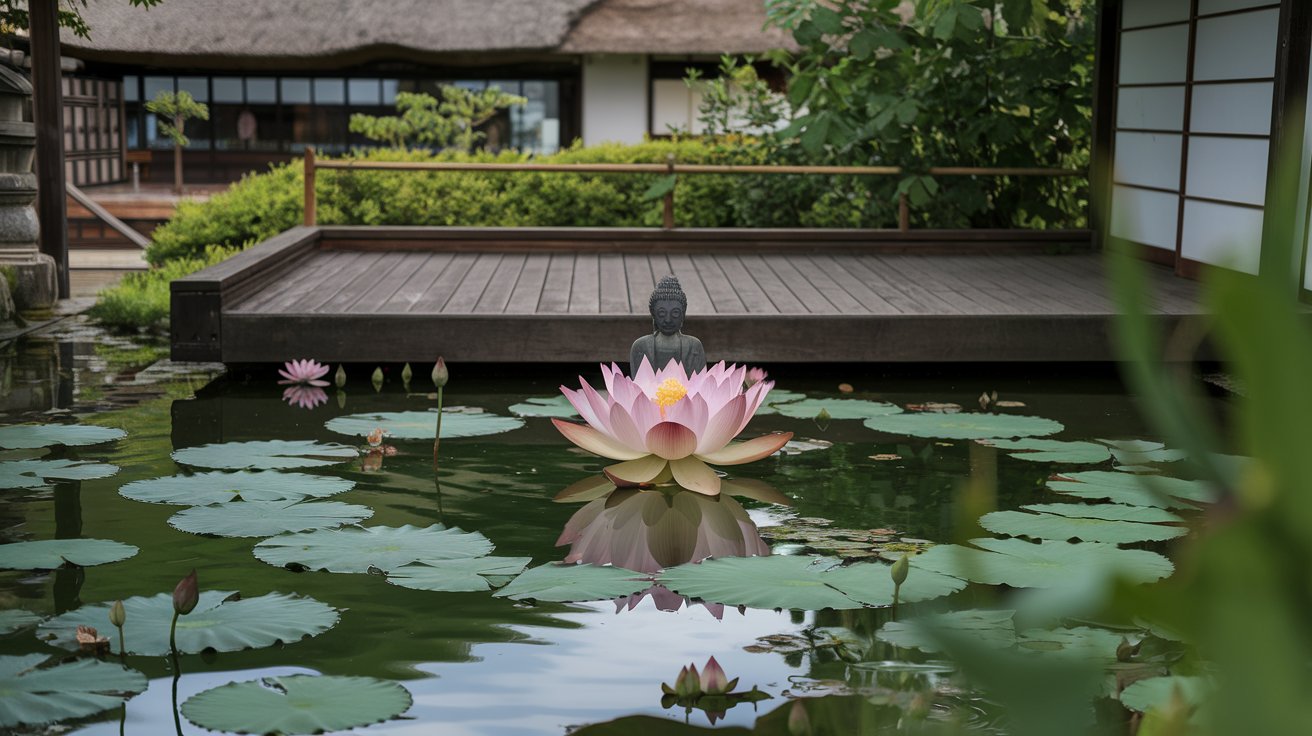
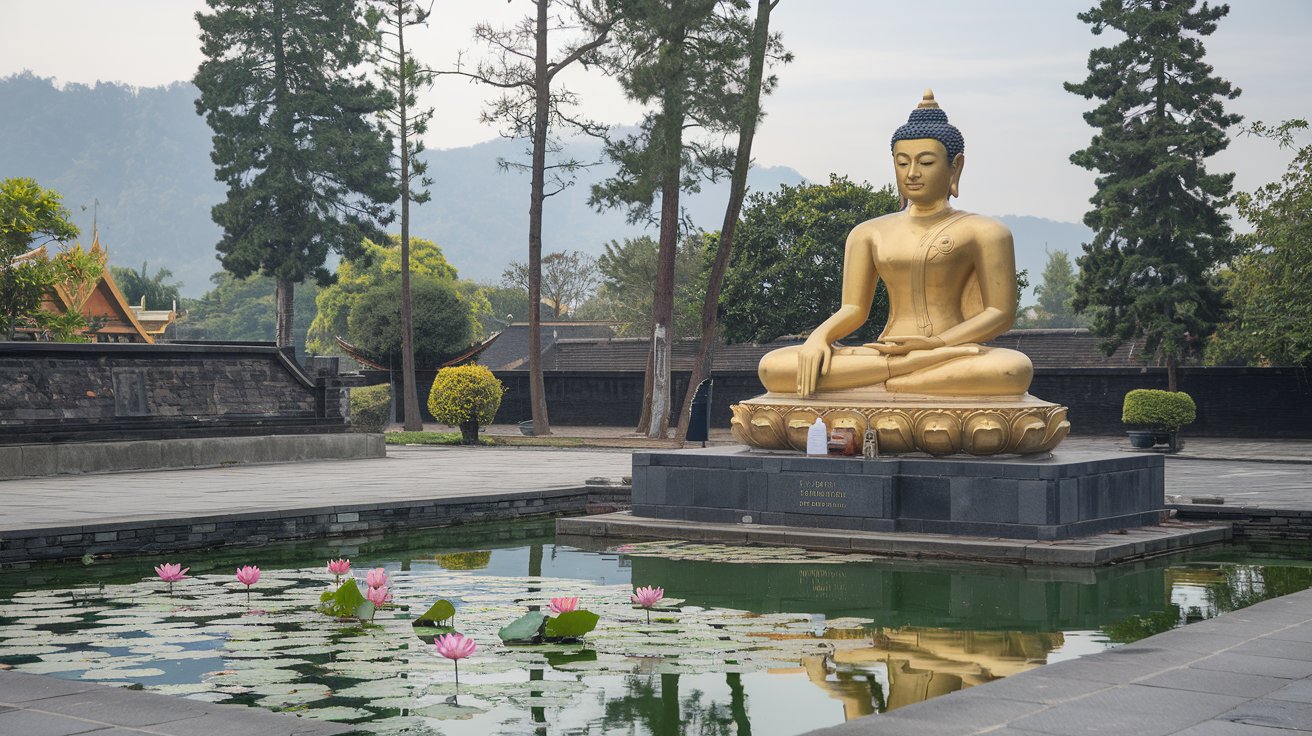
Another significant symbol associated with Buddhist nirvana is the lotus flower, particularly a fully bloomed lotus, which represents the achievement of enlightenment despite originating in the mud of samsara. The bodhi tree under which the Buddha achieved enlightenment also serves as a symbol of nirvana, representing the place where complete awakening occurred. In contemporary American Buddhist communities in 2026, the Dharma wheel (dharmachakra) is frequently used to represent the path to nirvana through the Buddha’s teachings, with its eight spokes representing the Noble Eightfold Path. The empty circle or ensō in Zen Buddhism symbolizes enlightenment, completeness, and the void – concepts intimately connected with nirvana.
Is Nirvana Enlightenment? Understanding the Relationship
The relationship between nirvana and enlightenment is nuanced and varies somewhat between Buddhist traditions, though they are intimately connected concepts. In Theravada Buddhism, nirvana is the ultimate goal and enlightenment refers to the wisdom that realizes nirvana, making them essentially two aspects of the same achievement. An arahant who has achieved full enlightenment has simultaneously realized nirvana, as the complete wisdom that constitutes enlightenment is inseparable from the liberation that is nirvana. This direct equation is maintained in most Theravada contexts, where the terms are often used interchangeably.
In Mahayana Buddhism, the relationship becomes more complex with the introduction of the bodhisattva ideal. Enlightenment in Mahayana refers to the achievement of full Buddhahood, which includes not only the liberation of nirvana but also the perfection of compassion and skillful means to help all beings. Some Mahayana teachings distinguish between the nirvana of an arahant (hinayana nirvana) and the non-abiding nirvana of a Buddha, who remains engaged with samsara out of compassion while being completely free from its afflictions. According to research from American Buddhist universities in 2026, approximately 55% of U.S. Buddhist practitioners follow Mahayana traditions where this distinction is significant. Understanding whether nirvana is enlightenment depends largely on which Buddhist tradition and interpretation one follows, though all agree that both represent the cessation of suffering and the realization of ultimate truth.
Is Nirvana Nothingness? Addressing Common Misconceptions
One of the most persistent misconceptions about nirvana in Buddhism is that it represents mere nothingness, annihilation, or the complete cessation of existence. This misunderstanding has plagued Western interpretations since Buddhism first arrived in Europe and America, leading many to view Buddhist liberation as nihilistic rather than profoundly positive. The confusion arises partly from Buddhist terminology that emphasizes cessation, extinction, and emptiness, which can sound like annihilation to ears unfamiliar with Buddhist philosophy. However, nirvana is not nothingness in the sense of blank non-existence or the destruction of consciousness.
Buddhist texts consistently describe nirvana in positive terms when discussing the actual experience, using phrases like “supreme bliss,” “the deathless,” “perfect peace,” “the highest happiness,” and “the island of refuge.” What ceases in nirvana is not existence itself but rather the conditions that produce suffering: craving, ignorance, and the constructed sense of a separate self. The consciousness of an enlightened being continues to function, perceive, and engage with reality, but without the distortions created by self-centered clinging and aversion. Contemporary Buddhist philosophers in the United States emphasize that nirvana represents the fullest expression of consciousness, freed from limitations rather than its annihilation.
The doctrine of emptiness (sunyata) in Buddhism further clarifies this point: emptiness does not mean that nothing exists, but rather that all phenomena are empty of inherent, independent existence. Similarly, nirvana is empty of all conditioned attributes but is not therefore nothing. The Buddha himself explicitly rejected annihilationism as a wrong view, placing it alongside eternalism as two extremes to avoid. In 2026, American Buddhist teachers report that properly understanding that nirvana is not nothingness but rather the unconditioned reality beyond conceptual limitation is crucial for maintaining motivation on the spiritual path and avoiding nihilistic misinterpretations of Buddhist liberation.
The Opposite of Nirvana: Understanding Samsara
The opposite of nirvana in Buddhism is samsara, the cycle of birth, death, and rebirth characterized by suffering, impermanence, and dissatisfaction. While nirvana represents complete liberation and peace, samsara embodies the conditioned existence where beings wander through various realms of existence driven by karma and mental afflictions. Understanding this opposition is fundamental to Buddhist practice, as recognizing the unsatisfactory nature of samsara motivates the pursuit of liberation. The contrast between these two states illuminates the entire purpose and urgency of Buddhist spiritual practice.
Samsara is sustained by the three poisons – greed, hatred, and delusion – which continuously generate karma that propels beings through countless rebirths. In this conditioned realm, even temporary pleasures are ultimately unsatisfactory because they are impermanent and cannot provide lasting fulfillment. The six realms of samsara in Buddhist cosmology include the hell realms, hungry ghost realm, animal realm, human realm, jealous god realm, and heavenly realms, all of which involve suffering in various forms. By contrast, nirvana transcends all these realms entirely, representing freedom from the very mechanisms that create cyclic existence. American Buddhist practitioners in 2026 increasingly use the samsara-nirvana dichotomy as a practical framework for recognizing when actions and mental states lead toward liberation versus continued suffering.
Contemporary Buddhism and Inclusive Practice in America
Buddhism in the United States has evolved to become increasingly inclusive and welcoming to practitioners of all backgrounds, identities, and orientations. The question of whether Buddhism supports LGBTQ individuals has become particularly relevant as American Buddhist communities grow more diverse and socially engaged. The fundamental Buddhist teachings of compassion, non-harm, and the recognition that all beings seek happiness and wish to avoid suffering provide a strong ethical foundation for inclusion and acceptance regardless of sexual orientation or gender identity.
Most American Buddhist organizations in 2026 actively welcome LGBTQ practitioners, with many prominent teachers and leaders openly identifying as LGBTQ themselves. Buddhist principles emphasize reducing suffering and cultivating wisdom rather than adhering to rigid social conventions about gender or sexuality. The path to nirvana is open to all beings equally, without discrimination based on identity characteristics. Organizations like the Buddhist Peace Fellowship and many meditation centers across the United States have explicit non-discrimination policies and create intentionally inclusive spaces for practice. While some traditional Asian Buddhist cultures maintain conservative views on gender and sexuality, American convert Buddhism has largely embraced progressive values aligned with Buddhist ethics of compassion and non-harm. Surveys from 2026 indicate that approximately 78% of American Buddhist centers explicitly welcome LGBTQ practitioners, with this percentage steadily increasing as younger, more diverse practitioners enter Buddhist communities.
Related video about what is nirvana in buddhism
This video complements the article information with a practical visual demonstration.
What you should know
What happens if you reach nirvana in Buddhism?
When you reach nirvana, you experience complete liberation from suffering, craving, and the cycle of rebirth. All mental afflictions including greed, hatred, and delusion are permanently extinguished. You gain perfect wisdom, unshakeable peace, and spontaneous compassion while living. After death, you enter parinirvana and are not reborn in any realm, having completely transcended samsara. The experience is described as supreme bliss, the deathless state, and perfect freedom from all conditioned existence.
What are the 4 stages of nirvana in Buddhism?
The four stages of enlightenment leading to nirvana are: (1) Stream-Enterer (Sotapanna), who eliminates belief in permanent self, doubt, and attachment to rituals; (2) Once-Returner (Sakadagami), who weakens sensual desire and ill-will; (3) Non-Returner (Anagami), who completely eliminates sensual desire and ill-will; and (4) Arahant, who eliminates all ten fetters and achieves complete liberation. Each stage represents progressively deeper freedom from mental defilements and brings practitioners closer to final nirvana.
Is nirvana in Buddhism the same as heaven?
Nirvana is not heaven as understood in Western religions. While heaven in Buddhist cosmology exists as a temporary realm within samsara where beings enjoy pleasant experiences until their positive karma is exhausted, nirvana transcends all realms entirely. Heaven is a conditioned state subject to impermanence, whereas nirvana is the unconditioned state beyond birth and death. Nirvana is not a place to go but rather the complete cessation of the causes of suffering and cyclic existence.
How do you reach nirvana in Buddhism?
You reach nirvana by following the Noble Eightfold Path, which includes right view, intention, speech, action, livelihood, effort, mindfulness, and concentration. This involves three essential trainings: ethical conduct through following precepts, mental discipline through meditation practices like vipassana, and wisdom through understanding impermanence, suffering, and non-self. Practitioners must eliminate the ten fetters including self-view, doubt, sensual desire, ill-will, and ignorance through sustained practice over time, typically requiring years or lifetimes of dedicated effort.
Is nirvana nothingness or annihilation?
Nirvana is not nothingness or annihilation of existence. While nirvana involves the cessation of craving, ignorance, and the constructed self, it is described in Buddhist texts using positive terms like supreme bliss, perfect peace, and the deathless state. What ceases is not consciousness itself but the conditions that create suffering. The Buddha explicitly rejected annihilationism as a wrong view. Nirvana represents the fullest expression of consciousness freed from limitations and distortions, not its destruction.
What is the difference between nirvana in Buddhism and Hinduism?
While both traditions use similar terminology, Buddhist nirvana differs fundamentally from Hindu moksha. Hinduism teaches liberation as the eternal soul (atman) merging with Brahman, the ultimate divine reality. Buddhism denies the existence of any permanent soul through the doctrine of anatta (non-self) and describes nirvana as realizing emptiness and the interdependent nature of all phenomena. Hindu liberation involves union with the divine, while Buddhist nirvana emphasizes the extinguishing of the illusion that there was ever a separate self to be liberated.
| Key Aspect | Important Details | Benefit |
|---|---|---|
| Definition of Nirvana | Complete liberation from suffering, craving, and rebirth; extinction of greed, hatred, and delusion | Permanent freedom from all forms of suffering and mental afflictions |
| Four Stages | Stream-Enterer, Once-Returner, Non-Returner, and Arahant; progressive elimination of ten fetters | Clear roadmap showing measurable progress toward enlightenment |
| Nirvana vs Heaven | Not a temporary realm but unconditioned state beyond all existence; transcends even heavenly realms | Ultimate liberation beyond temporary pleasant states |
| Path to Achieve | Noble Eightfold Path; ethical conduct, meditation, and wisdom; typically requires years of practice | Systematic method accessible to all practitioners regardless of background |
| Experience of Nirvana | Supreme bliss, perfect wisdom, spontaneous compassion, unshakeable peace; not annihilation | Positive transformation of consciousness rather than mere cessation |
| Modern Practice (2026) | 3.2 million American Buddhists; inclusive communities welcoming all identities; online and in-person sanghas | Accessible path with contemporary support systems and diverse communities |