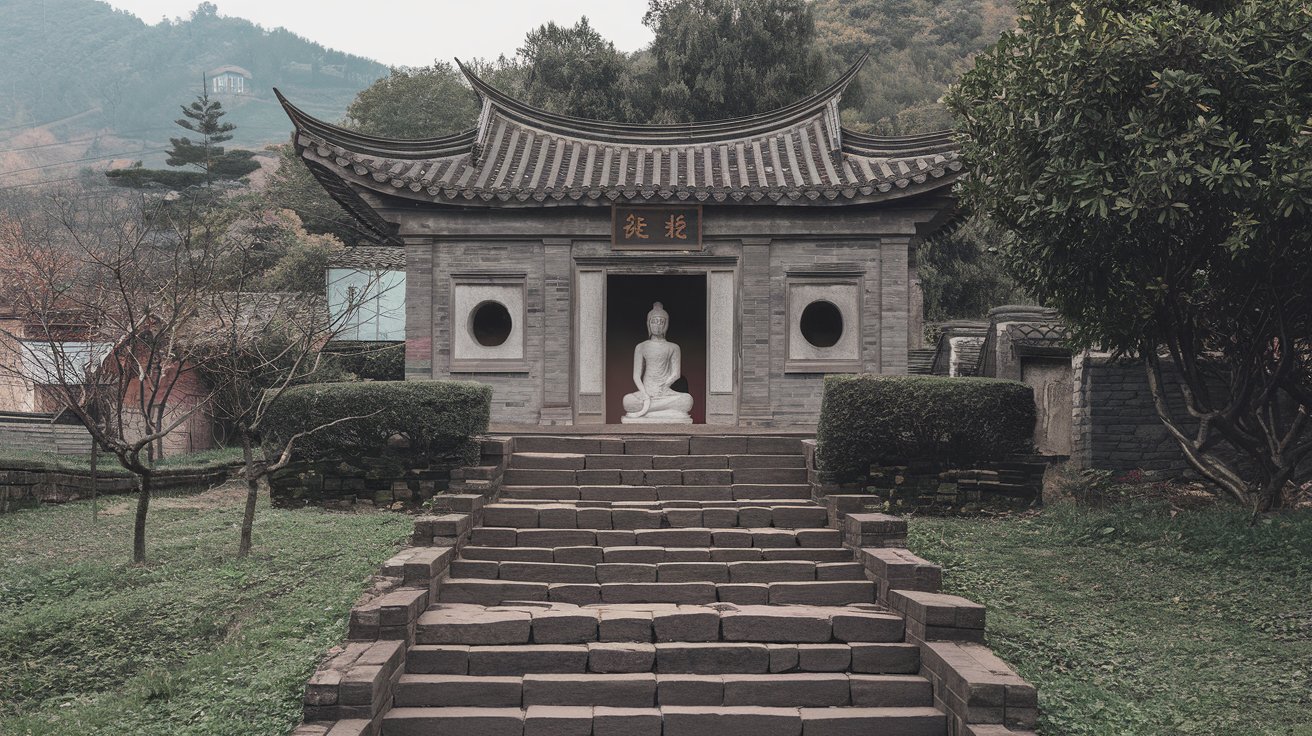
Buddhism arrived in China during the Han Dynasty (206 BCE – 220 CE) through Silk Road trade routes connecting India and Central Asia to China. Buddhist merchants, monks, and missionaries introduced the religion gradually, with the first documented arrival around the 1st century CE. This transformative cultural exchange fundamentally altered Chinese philosophy, art, and society, creating a unique synthesis of Indian Buddhist teachings and Chinese traditions that continues to influence millions of practitioners in the United States and worldwide in 2026.
Origin of Buddhism Before Its Journey to China
Buddhism originated in northern India around the 5th century BCE when Siddhartha Gautama, later known as the Buddha, achieved enlightenment under the Bodhi tree in present-day Bihar. The religion quickly spread throughout the Indian subcontinent, developing into different schools of thought. By the 3rd century BCE, Emperor Ashoka of the Mauryan Dynasty actively promoted Buddhist missionary activities across Asia, sending monks to spread the Dharma to distant lands. This imperial patronage established Buddhism as a major world religion and set the stage for its eventual transmission eastward.
The religion evolved into two major branches: Theravada Buddhism, which remained dominant in South and Southeast Asia, and Mahayana Buddhism, which developed around the 1st century CE and would become the primary form transmitted to China. Mahayana Buddhism emphasized the bodhisattva ideal—enlightened beings who postpone nirvana to help others achieve liberation. This compassionate philosophy resonated deeply with Chinese cultural values and facilitated the religion’s acceptance. The sophisticated Buddhist philosophical systems, including concepts of karma, rebirth, and meditation practices, offered alternatives to existing Chinese Confucian and Taoist traditions.
The Silk Road: Buddhism’s Gateway to China
The Silk Road trade network served as the primary conduit for Buddhism’s transmission from India to China. This vast network of interconnected trade routes stretched over 4,000 miles, linking the Mediterranean world with East Asia through Central Asian oases. Buddhist monks and merchants traveling these routes established monasteries in key trading cities like Dunhuang, Kucha, and Khotan, creating a chain of Buddhist centers that facilitated the religion’s gradual eastward spread. These oasis kingdoms became vibrant centers of Buddhist learning where texts were translated, religious art flourished, and travelers could rest while absorbing Buddhist teachings.
Archaeological evidence from 2026 reveals that Central Asian kingdoms played a crucial intermediary role in adapting Indian Buddhism for Chinese audiences. The Kushan Empire (1st-3rd centuries CE) particularly facilitated this cultural transmission by controlling territories spanning from northern India through Afghanistan and into Central Asia. Kushan rulers patronized Buddhism extensively, commissioning Buddhist art that blended Greco-Roman, Persian, and Indian styles. This artistic synthesis, known as Gandhara art, traveled eastward along trade routes, introducing Chinese audiences to visual representations of the Buddha and Buddhist narratives. The multilingual environment of Silk Road cities enabled the translation of Sanskrit Buddhist texts into various Central Asian languages and eventually into Chinese.
Buddhism’s Initial Arrival During the Han Dynasty
Historical records indicate that Buddhism first reached China during the reign of Emperor Ming of Han (58-75 CE), though the exact circumstances remain debated among scholars. According to traditional accounts, Emperor Ming experienced a prophetic dream about a golden deity, which court scholars interpreted as referring to the Buddha. The emperor reportedly dispatched envoys westward who encountered Buddhist monks in Central Asia and returned with Buddhist scriptures and images. This legendary account, while historically uncertain, reflects the Chinese understanding of Buddhism’s formal introduction to the imperial court.
The earliest confirmed evidence of Buddhist presence in China dates to the mid-1st century CE, when a community of Buddhist monks and lay followers existed in the capital city of Luoyang. These early practitioners were primarily foreign merchants and monks from Central Asia and India who established small temples and translation centers. The Sutra of Forty-Two Sections, traditionally considered the first Buddhist text translated into Chinese, appeared during this period. However, Buddhism remained largely confined to foreign communities and attracted limited Chinese interest initially, as the religion’s otherworldly focus on liberation from suffering contrasted sharply with Confucianism’s emphasis on social harmony and family obligations.
Key Figures Who Brought Buddhism to China
Several pioneering monks played instrumental roles in establishing Buddhism in China during the Han Dynasty and subsequent periods. An Shigao, a Parthian prince turned Buddhist monk, arrived in Luoyang around 148 CE and became one of the first major translators of Buddhist texts into Chinese. He focused on meditation texts and Abhidharma literature, introducing Chinese audiences to systematic Buddhist psychology and contemplative practices. His translation work established important precedents for rendering Sanskrit Buddhist terminology into Chinese, creating a specialized vocabulary that would shape Chinese Buddhist discourse for centuries.
Another crucial figure was Lokaksema, a Kushan monk who worked in Luoyang between 167-186 CE. He made the first Chinese translations of Mahayana sutras, including early versions of the Perfection of Wisdom texts and the Pure Land sutras. These translations introduced Chinese readers to distinctly Mahayana concepts like the bodhisattva path and the existence of multiple Buddha-realms. Later, during the 4th-5th centuries, monks like Kumarajiva from Kucha revolutionized Chinese Buddhism through more accurate and elegant translations that made Buddhist philosophy more accessible to Chinese intellectuals. Kumarajiva’s translation bureau in Chang’an (modern Xi’an) produced definitive Chinese versions of major Mahayana texts that remain authoritative in 2026.
Buddhism During the Period of Division
The collapse of the Han Dynasty in 220 CE initiated nearly four centuries of political fragmentation known as the Six Dynasties period (220-589 CE). Paradoxically, this era of instability proved crucial for Buddhism’s expansion in China. The widespread warfare, social disruption, and philosophical uncertainty created conditions where Buddhism’s message about suffering and liberation found receptive audiences. Northern China fell under the control of non-Chinese dynasties established by Central Asian and Mongolian peoples, many of whom already practiced Buddhism or were familiar with the religion. These foreign rulers patronized Buddhism as a way to legitimize their rule while maintaining distance from Confucian ideology associated with Chinese cultural supremacy.
In southern China, Chinese aristocratic families who fled the northern invasions created sophisticated courts where Buddhist philosophy flourished in dialogue with Daoism. Elite Chinese intellectuals began seriously engaging with Buddhist texts, finding parallels between Buddhist emptiness teachings and Daoist concepts of non-being. This intellectual movement, known as geyi (concept-matching), used Daoist terminology to explain Buddhist ideas, though it sometimes led to misunderstandings. Buddhist monasteries became centers of learning, art, and charitable activities, establishing Buddhism as an integral part of Chinese society. By the end of this period, thousands of monasteries existed across China, housing tens of thousands of monks and nuns, with Buddhism having transformed from a foreign curiosity into a major Chinese religious tradition.
Cultural Adaptations and Chinese Buddhist Innovations
As Buddhism took root in China, it underwent significant transformations to align with Chinese cultural values and philosophical traditions. One major adaptation involved reconciling Buddhist monasticism, which required renouncing family ties, with Confucian filial piety, which demanded absolute devotion to parents and ancestors. Chinese Buddhists developed doctrines showing how leaving home to become a monk ultimately benefited one’s parents by generating spiritual merit. They also created elaborate ghost festival rituals where monks performed ceremonies to relieve the suffering of deceased ancestors, seamlessly integrating Buddhist practices with Chinese ancestor veneration customs.
Chinese Buddhism also developed unique doctrinal innovations that distinguished it from Indian Buddhism. The Buddha-nature theory, which held that all beings possess inherent Buddha-nature and can achieve enlightenment, became central to Chinese Buddhist thought. This optimistic teaching resonated with Chinese philosophical preferences for affirming the inherent goodness of human nature. Chinese monks also created indigenous Buddhist schools, most notably Chan Buddhism (known as Zen in Japan), which emphasized direct meditation practice and sudden enlightenment over scriptural study. Pure Land Buddhism, focusing on faith-based devotion to Amitabha Buddha, became the most popular form among ordinary Chinese people, offering salvation through simple practices accessible to all social classes regardless of education level.
Buddhism Versus Confucianism and Taoism
The arrival of Buddhism in China created complex dynamics with existing Chinese religious and philosophical traditions. Confucian scholars initially criticized Buddhism as a foreign doctrine that undermined social order by encouraging people to abandon family responsibilities and become monastics. They questioned why Buddhist texts never appeared in the ancient Chinese classics and argued that shaving one’s head and wearing foreign-style robes violated proper ritual decorum. The Buddhist practice of not bowing to rulers particularly troubled Confucian officials, who viewed such behavior as dangerously subversive to imperial authority and social hierarchy.
However, Buddhism also found common ground with both Confucianism and Daoism, leading to creative synthesis rather than pure competition. Buddhist concepts of karma and moral causation complemented Confucian ethics, while Buddhist meditation practices resonated with Daoist cultivation techniques. Some Chinese intellectuals practiced all three traditions simultaneously, seeing them as addressing different aspects of life: Confucianism for social ethics, Daoism for natural harmony, and Buddhism for spiritual liberation. By the Tang Dynasty (618-907 CE), this syncretic approach became characteristic of Chinese religious life, with most Chinese people drawing on all three traditions as needed. Contemporary research in 2026 shows that approximately 185 million people in China identify with Buddhist practices, though many combine Buddhist beliefs with traditional Chinese folk religion and secular values.
Which Branch of Buddhism Arrived in China
While early Buddhist transmission to China included various texts and practices, Mahayana Buddhism became the dominant form that took root and flourished in Chinese soil. Mahayana Buddhism, which emerged in India around the 1st century CE, distinguished itself from earlier Buddhist schools through its emphasis on the bodhisattva ideal, universal salvation, and the recognition of multiple Buddhas and celestial realms. These features made Mahayana particularly appealing to Chinese religious sensibilities, which valued inclusive salvation and already recognized multiple divine beings in folk religion.
The Mahayana sutras that arrived in China introduced revolutionary concepts that transformed Chinese Buddhism. The Lotus Sutra proclaimed that all beings would eventually achieve Buddhahood, the Pure Land sutras described paradisiacal Buddha-realms accessible through devotion, and the Perfection of Wisdom texts expounded the philosophy of emptiness. Chinese translators and monks embraced these teachings enthusiastically, creating distinctly Chinese interpretations and practices. While some Theravada texts were translated into Chinese, they never gained the popularity or influence of Mahayana traditions. This Mahayana dominance continues in 2026, with Chinese Buddhist communities in the United States predominantly practicing Mahayana forms including Pure Land, Chan, and Tiantai traditions.
The Role of Buddhist Art and Architecture
Buddhist art and architecture played crucial roles in establishing Buddhism’s presence in China and communicating Buddhist teachings to non-literate populations. The construction of pagodas, Chinese-style stupas housing sacred relics, created visible landmarks that proclaimed Buddhism’s importance in the landscape. Cave temple complexes like those at Dunhuang, Yungang, and Longmen featured thousands of Buddha statues carved into cliff faces, demonstrating the religion’s grandeur and the devotion of its patrons. These artistic projects, often sponsored by emperors and wealthy donors, required massive resources and labor, cementing Buddhism’s position as a major social institution.
Chinese Buddhist art evolved distinctive styles by combining Indian iconographic conventions with Chinese aesthetic preferences. Buddha images gradually acquired more Chinese facial features and wore robes resembling Chinese garments rather than Indian dress. Narrative wall paintings depicted Buddhist stories in formats familiar from Chinese visual traditions. The artistic exchange went both directions, with Chinese artistic techniques and motifs traveling back along the Silk Road to influence Buddhist art in Central Asia and India. In 2026, major museums in the United States, including the Metropolitan Museum of Art and the Asian Art Museum, house extensive collections of Chinese Buddhist art that demonstrate this remarkable cultural synthesis, attracting millions of visitors annually and educating Americans about Buddhism’s history in China.
Buddhism’s Impact on Chinese Society and Culture
Buddhism’s arrival fundamentally transformed multiple aspects of Chinese civilization beyond religious practice alone. The translation of Buddhist texts from Sanskrit and Central Asian languages into Chinese expanded the Chinese written language, introducing thousands of new terms and concepts. Buddhist translation principles influenced how Chinese scholars approached foreign texts generally, developing sophisticated techniques for rendering foreign ideas into Chinese that remain relevant in 2026. Buddhist monastery libraries preserved vast collections of texts, making monasteries important centers of learning where literacy and scholarship flourished even during periods of political chaos.
Buddhism also profoundly impacted Chinese social institutions and values. Buddhist monasteries provided social services including medical care, education, and disaster relief, establishing models of organized charity that influenced Confucian welfare institutions. Buddhist teachings about compassion toward all living beings encouraged vegetarianism and opposition to animal sacrifice, gradually softening some harsh aspects of Chinese criminal justice. The concept of karma introduced individual moral accountability beyond social roles, empowering people to improve their circumstances through ethical behavior. Buddhist meditation practices influenced Chinese medicine, martial arts, and literati cultivation practices. The religion’s aesthetic contributions shaped Chinese poetry, painting, music, and garden design. Modern scholarship estimates that Buddhist ideas influenced approximately 30-40% of Chinese vocabulary related to philosophy, psychology, and abstract thought, demonstrating the depth of Buddhism’s integration into Chinese intellectual culture.
Buddhism in China Today and Its American Connections
Contemporary Buddhism in China reflects both continuity with historical traditions and adaptations to modern circumstances. Following severe persecution during the Cultural Revolution (1966-1976), when thousands of monasteries were destroyed and monks were forced to return to lay life, Buddhism has experienced significant revival since the 1980s. The Chinese government now recognizes Buddhism as one of five official religions, though it maintains strict oversight of religious activities. Major historical monasteries have been restored, Buddhist education has resumed, and millions of Chinese people visit temples regularly, particularly during traditional festivals. Research data from 2026 indicates that approximately 18-20% of China’s population, roughly 250-280 million people, participate in Buddhist practices to some degree, though formal monastery membership remains smaller due to government restrictions.
The connection between Chinese Buddhism and the United States has grown dramatically since the 1960s. Chinese Buddhist teachers began establishing temples and meditation centers across America, introducing Americans to Chan (Zen), Pure Land, and other Chinese Buddhist traditions. Major cities including Los Angeles, New York, and San Francisco now host thriving Chinese Buddhist communities serving both Chinese immigrants and Western converts. Organizations like the Buddhist Association of the United States and Dharma Drum Mountain’s American branches offer meditation retreats, dharma talks, and cultural programs that adapt traditional Chinese Buddhism for American audiences. Academic programs at universities including Columbia, Stanford, and the University of California, Berkeley conduct cutting-edge research on Chinese Buddhism’s historical development and contemporary manifestations. In 2026, approximately 2-3 million Americans practice some form of Buddhism, with Chinese Buddhist traditions representing a significant portion of this community, continuing the religion’s remarkable journey that began on the Silk Road nearly two millennia ago.
Related video about how did buddhism arrive in china
This video complements the article information with a practical visual demonstration.
Questions & Answers
How did Buddhism spread from India to China?
Buddhism spread from India to China primarily through the Silk Road trade routes during the Han Dynasty (206 BCE – 220 CE). Buddhist merchants, monks, and missionaries traveled through Central Asian kingdoms, establishing monasteries in oasis cities that served as transmission points. The religion spread gradually through a combination of merchant activity, diplomatic missions, and dedicated missionary work. Central Asian kingdoms like the Kushan Empire played crucial intermediary roles by patronizing Buddhism and facilitating the translation of Sanskrit texts into languages that could eventually be rendered into Chinese. This process took several centuries, with Buddhism becoming firmly established in China by the 4th-5th centuries CE.
Who were the key figures that brought Buddhism to China?
Several pioneering monks were instrumental in establishing Buddhism in China. An Shigao, a Parthian prince turned monk, arrived around 148 CE and became one of the first major translators of Buddhist meditation texts. Lokaksema, a Kushan monk working between 167-186 CE, made the first Chinese translations of Mahayana sutras. Later, Kumarajiva (344-413 CE) from Kucha revolutionized Chinese Buddhism through elegant and accurate translations that made Buddhist philosophy accessible to Chinese intellectuals. These translators, along with numerous other Central Asian and Indian monks, worked tirelessly to render Buddhist concepts into Chinese language and adapt the religion to Chinese cultural contexts.
What branch of Buddhism arrived in China and became dominant?
Mahayana Buddhism became the dominant form of Buddhism in China, though early transmission included various Buddhist texts and practices. Mahayana emphasized the bodhisattva ideal, universal salvation, and recognition of multiple Buddhas, which resonated with Chinese religious sensibilities. Key Mahayana texts including the Lotus Sutra, Pure Land sutras, and Perfection of Wisdom texts were translated into Chinese and became foundational to Chinese Buddhist traditions. Chinese monks developed unique Mahayana schools including Chan (Zen) and Pure Land Buddhism. While some Theravada texts were translated, they never achieved the popularity or influence of Mahayana traditions, which continue to dominate Chinese Buddhism in 2026.
What were the main cultural impacts of Buddhism arriving in China?
Buddhism’s arrival fundamentally transformed Chinese civilization across multiple dimensions. It expanded the Chinese language by introducing thousands of new philosophical and psychological terms that enriched Chinese intellectual discourse. Buddhist monasteries became centers of learning, art, and social services including medical care and disaster relief. Buddhist concepts like karma introduced individual moral accountability, while teachings on compassion influenced attitudes toward animals and criminal justice. Buddhist art and architecture created new aesthetic traditions that influenced Chinese painting, sculpture, and literature. The religion also developed syncretic relationships with Confucianism and Daoism, creating the characteristic Chinese approach of drawing on multiple traditions simultaneously, which continues to shape Chinese culture in 2026.
What role does Buddhism play in China today in 2026?
In 2026, Buddhism remains a significant religious and cultural force in China despite historical persecution during the Cultural Revolution. Approximately 18-20% of China’s population, around 250-280 million people, participate in Buddhist practices to varying degrees. The Chinese government recognizes Buddhism as one of five official religions, and major historical monasteries have been restored and reopened. Buddhism influences Chinese culture through temple festivals, vegetarian cuisine, artistic traditions, and philosophical concepts integrated into everyday language. However, the government maintains strict oversight of religious activities. Chinese Buddhist teachers have also established significant presences in the United States and other countries, creating global networks that connect Chinese Buddhism with international practitioners and scholars.
How did Buddhism initially conflict with Chinese traditions like Confucianism?
Buddhism initially faced significant resistance from Confucian scholars who criticized it as a foreign doctrine undermining social order. Confucians objected to Buddhist monasticism because it required abandoning family responsibilities, which violated the core Confucian value of filial piety. They questioned why Buddhist teachings never appeared in ancient Chinese classics and criticized practices like shaving heads and refusing to bow to rulers as violations of proper ritual conduct. However, Chinese Buddhists gradually developed doctrines reconciling monastic life with filial piety, created ancestor veneration rituals that integrated Buddhist practices with Chinese customs, and found common ground between Buddhist ethics and Confucian moral teachings. This led to a syncretic approach where many Chinese people practiced elements of Buddhism, Confucianism, and Daoism simultaneously.
| Historical Period | Key Developments | Lasting Impact |
|---|---|---|
| Han Dynasty (1st-2nd century CE) | Initial arrival via Silk Road, first translations, establishment of foreign Buddhist communities | Foundation for future growth, introduction of Buddhist concepts to Chinese intellectuals |
| Six Dynasties (220-589 CE) | Rapid expansion, thousands of monasteries built, major translation projects, patronage by non-Chinese rulers | Buddhism became integral to Chinese culture, art, and philosophy |
| Tang-Song Dynasties (618-1279 CE) | Development of distinctly Chinese Buddhist schools (Chan, Pure Land), peak of Buddhist influence | Created forms of Buddhism that spread to Korea, Japan, and Vietnam |
| Modern Era (1980s-2026) | Revival after Cultural Revolution, restoration of monasteries, global expansion to United States and worldwide | 250-280 million practitioners in China, significant presence in United States with 2-3 million American Buddhists |