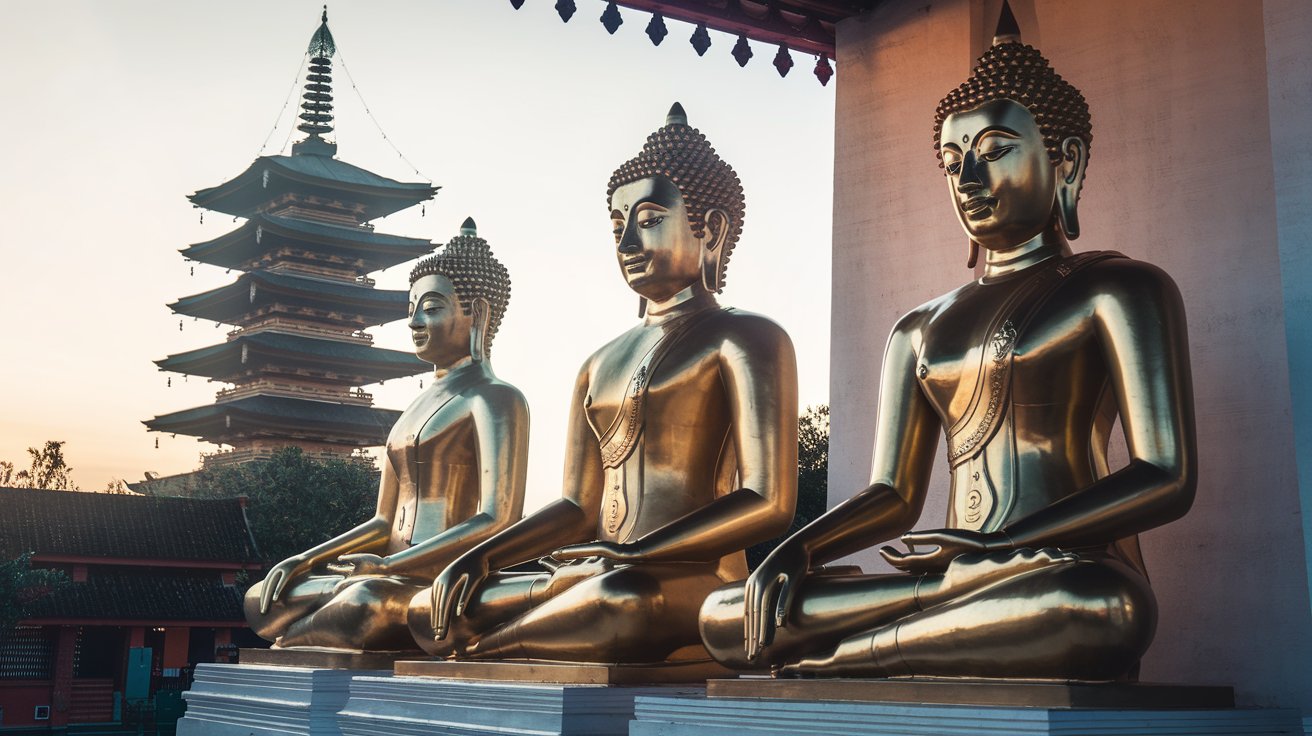
The Three Jewels of Buddhism, also known as the Triple Gem or Triratna, form the foundation of Buddhist practice and belief. These three essential components—Buddha (the enlightened teacher), Dharma (the teachings), and Sangha (the community)—represent the core principles that guide over 7 million Buddhist practitioners in the United States as of 2026. Understanding these jewels provides insight into what Buddhists hold most precious in their spiritual journey.
What Do the Three Jewels Represent in Buddhism?
The Three Jewels represent the fundamental refuge for all Buddhist practitioners, regardless of tradition or school. Each jewel symbolizes an essential aspect of the Buddhist path toward enlightenment and liberation from suffering. The Buddha jewel represents the possibility of awakening, the Dharma jewel embodies the teachings and truth, and the Sangha jewel provides the supportive community necessary for spiritual growth.
In Buddhist philosophy, these three elements are considered jewels because of their rarity and value in helping practitioners overcome ignorance and achieve lasting peace. Just as precious gems are treasured in the material world, the Three Jewels hold supreme value in the spiritual realm. Taking refuge in these jewels marks the formal entry into Buddhist practice and commitment to the path of transformation that has guided practitioners for over 2,500 years.
The First Jewel: Buddha – The Awakened Teacher
The Buddha jewel represents Siddhartha Gautama, the historical figure who attained complete enlightenment under the Bodhi tree around 2,500 years ago in ancient India. More broadly, Buddha represents the potential for awakening that exists within all sentient beings. This jewel serves as both a historical teacher and a symbol of enlightened consciousness that practitioners can aspire to achieve.
In contemporary American Buddhist communities, taking refuge in the Buddha means acknowledging the possibility of personal transformation and enlightenment. It does not require worship of Buddha as a deity, but rather respect for the qualities of wisdom, compassion, and awakened awareness he embodied. As of 2026, Buddhist centers across the United States emphasize that the Buddha jewel represents an achievable state of consciousness rather than an unattainable divine being, making Buddhism accessible to practitioners from diverse backgrounds.
Historical Buddha and His Teachings
The historical Buddha, born as Prince Siddhartha Gautama in present-day Nepal, renounced his privileged life to seek the end of human suffering. After years of spiritual practice, he discovered the Middle Way between extreme asceticism and indulgence, achieving enlightenment at age 35. His teachings spread throughout Asia and now reach millions of practitioners worldwide, including the growing Buddhist population in the United States.
Buddha Nature in All Beings
A key concept in Mahayana Buddhism holds that all beings possess Buddha nature—the inherent potential for awakening. This understanding transforms the Buddha jewel from an external figure into an internal quality to be cultivated. American Buddhist teachers in 2026 increasingly emphasize this democratic aspect of Buddhism, encouraging practitioners to discover their own enlightened nature through meditation, ethical conduct, and wisdom development.
The Second Jewel: Dharma – The Teachings and Truth
The Dharma jewel encompasses all Buddhist teachings, practices, and the ultimate truth about reality. This includes the Four Noble Truths, the Noble Eightfold Path, and countless sutras and commentaries developed over centuries. The Dharma provides the practical roadmap for ending suffering and achieving enlightenment, making it an indispensable component of Buddhist practice.
In the United States, where Buddhism has adapted to Western culture, the Dharma jewel includes both traditional Asian Buddhist texts and contemporary interpretations. Modern American Buddhist centers offer Dharma teachings through meditation apps, podcasts, online courses, and in-person retreats. As of 2026, approximately 65% of American Buddhists access Dharma teachings through digital platforms, reflecting the evolution of how these timeless truths reach contemporary practitioners.
Core Dharma Teachings
The foundation of Dharma includes the Four Noble Truths: the truth of suffering, the origin of suffering, the cessation of suffering, and the path leading to cessation. The Noble Eightfold Path provides specific guidance through right understanding, intention, speech, action, livelihood, effort, mindfulness, and concentration. These teachings offer a comprehensive framework for ethical living and mental development that remains relevant in modern American society.
Applying Dharma in Daily Life
The practical application of Dharma teachings transforms everyday experiences into opportunities for spiritual growth. American Buddhists in 2026 integrate Dharma principles into workplace ethics, relationships, environmental activism, and social justice work. The teachings on mindfulness, compassion, and interconnectedness provide valuable tools for navigating contemporary challenges including stress, anxiety, and the complexities of modern life in the United States.
The Third Jewel: Sangha – The Spiritual Community
The Sangha jewel represents the Buddhist community that supports practitioners on their spiritual journey. Traditionally, Sangha referred specifically to ordained monks and nuns, but in contemporary Western Buddhism, it includes the broader community of all Buddhist practitioners. This jewel provides essential support, guidance, and inspiration for maintaining consistent practice.
Across the United States in 2026, Buddhist sanghas range from traditional monastic communities to lay meditation groups meeting in homes, community centers, and online. Research indicates that practitioners who regularly participate in sangha activities maintain more consistent meditation practices and report higher levels of well-being. The invaluable qualities of sangha include mutual encouragement, shared wisdom, accountability, and the living embodiment of Buddhist principles that inspire continued growth.
Types of Buddhist Sangha
Buddhist communities in America include monastic sanghas of ordained practitioners, lay sanghas of householder Buddhists, and hybrid models combining both. Zen centers, Tibetan Buddhist organizations, Theravada meditation groups, and secular mindfulness communities all provide different flavors of sangha experience. As of 2026, over 2,000 established Buddhist centers operate throughout the United States, offering diverse approaches to community practice.
Virtual and In-Person Sangha in Modern Practice
The evolution of technology has created new forms of sangha that transcend geographical limitations. Virtual Buddhist communities connect practitioners across continents through video meditation sessions, online Dharma talks, and digital discussion forums. However, in-person sangha gatherings remain valued for their embodied sense of connection and shared presence. Many American Buddhists in 2026 participate in both virtual and physical sangha communities, benefiting from the advantages of each format.
Why Are the Three Jewels of Buddhism Important?
The importance of the Three Jewels stems from their comprehensive support of the Buddhist path. Buddha provides the inspiration and proof that enlightenment is possible, Dharma offers the practical methods for achieving it, and Sangha supplies the community support necessary for sustained practice. Together, these three elements create a complete system for spiritual development that has proven effective across cultures and centuries.
For American practitioners in 2026, the Three Jewels provide stability and direction in an increasingly chaotic world. They offer a framework for ethical decision-making, mental training, and community connection that addresses contemporary challenges. The jewels represent pillars of support that help practitioners navigate personal difficulties, societal problems, and the universal human quest for meaning and peace. Without these three elements working together, Buddhist practice would lack the complete structure necessary for transformation.
Taking Refuge in the Three Jewels
Taking refuge in the Three Jewels marks the formal commitment to Buddhist practice and represents a central ceremony in Buddhist tradition. This act involves reciting the refuge vows, typically stating: ‘I take refuge in the Buddha, I take refuge in the Dharma, I take refuge in the Sangha.’ The ceremony signifies a conscious decision to orient one’s life around these three principles and seek guidance from them.
Anyone can take refuge in the Three Jewels, regardless of their background, ethnicity, or previous religious affiliation. In the United States, refuge ceremonies accommodate diverse participants, from those raised in Buddhist families to converts from other traditions. The ceremony does not require abandoning critical thinking or blind faith; instead, it represents a commitment to investigate and practice the teachings with an open mind. As of 2026, many American Buddhist centers offer refuge ceremonies multiple times per year, with some providing online options for geographically distant practitioners.
The Refuge Ceremony Process
Traditional refuge ceremonies involve receiving precepts from a qualified teacher, though informal self-refuge is also recognized in many traditions. The ceremony typically includes prostrations, recitation of the Triple Gem, and sometimes receiving a Buddhist name. Modern American adaptations may modify traditional elements while maintaining the essential commitment to the Three Jewels and the ethical precepts that accompany refuge.
Daily Refuge Practice
Beyond the formal ceremony, taking refuge becomes a daily practice of remembering and returning to the Three Jewels. Many practitioners begin meditation sessions by reciting the refuge vows, reinforcing their commitment. This ongoing practice helps maintain alignment with Buddhist values and provides a touchstone during difficult times. Regular refuge practice strengthens one’s connection to the Buddha, Dharma, and Sangha as sources of wisdom and support.
The Three Jewels Symbol and Representation
The Three Jewels symbol, known as the Triratna, typically appears as three circles, jewels, or flames arranged vertically or in a triangular pattern. This visual representation serves as a reminder of the interconnected nature of Buddha, Dharma, and Sangha. The symbol appears on Buddhist flags, temples, statues, and personal jewelry, serving as a visual anchor for practitioners and a public expression of Buddhist identity.
In American Buddhist contexts, the Three Jewels symbol bridges traditional and contemporary aesthetics. Modern designers have created variations that appeal to Western sensibilities while maintaining the symbol’s essential meaning. As of 2026, the Triratna symbol appears in mindfulness apps, meditation center logos, and Buddhist-inspired artwork, helping make these ancient concepts accessible to contemporary American audiences. The symbol’s simplicity allows it to transcend cultural boundaries while conveying the fundamental structure of Buddhist refuge.
Three Jewels Chanting as Devotional Practice
Chanting as devotion to the Three Jewels represents a common practice across Buddhist traditions. The refuge chant, often recited in Pali, Sanskrit, or translated into English, serves multiple purposes: it focuses the mind, expresses commitment, and creates a sense of connection with the broader Buddhist community. Traditional chants include ‘Buddham saranam gacchami, Dhammam saranam gacchami, Sangham saranam gacchami,’ meaning ‘I go to the Buddha for refuge, I go to the Dharma for refuge, I go to the Sangha for refuge.’
In contemporary American Buddhist centers, Three Jewels chanting occurs during ceremonies, meditation sessions, and special occasions. Some communities chant exclusively in English to increase accessibility, while others maintain traditional languages alongside translations. Research from 2026 indicates that regular chanting practice enhances community bonding and deepens practitioner commitment. The rhythmic, repetitive nature of chanting also produces meditative states, combining devotional expression with contemplative practice in a single activity.
Interpretation of the Three Jewels Across Buddhist Traditions
Different Buddhist schools offer varied interpretations of the Three Jewels, reflecting the diversity within Buddhism itself. Theravada Buddhism tends toward a more literal understanding, emphasizing the historical Buddha, the original teachings preserved in the Pali Canon, and the ordained monastic community. Mahayana traditions expand these concepts, recognizing multiple Buddhas, including the possibility of celestial Buddhas and future Buddhas.
Vajrayana or Tibetan Buddhism introduces the concept of the Three Roots, which parallels and complements the Three Jewels: the Guru (teacher), Yidam (meditation deity), and Dharmapala (Dharma protectors). Zen Buddhism emphasizes direct experience over conceptual understanding, viewing the Three Jewels as aspects of one’s own true nature rather than external authorities. In the United States, where multiple Buddhist traditions coexist, practitioners often encounter and integrate these various interpretations, creating a rich, multifaceted understanding of the Three Jewels’ significance in contemporary practice.
Theravada Perspective on the Three Jewels
Theravada Buddhism maintains a conservative interpretation focused on the historical Buddha, the earliest recorded teachings, and the ordained sangha. This tradition emphasizes personal liberation through individual effort and views the Three Jewels as essential guides on the path to enlightenment. American Theravada centers, particularly those in the Insight Meditation tradition, teach accessible meditation techniques while maintaining respect for traditional understanding of the refuge jewels.
Mahayana and Vajrayana Interpretations
Mahayana traditions expand the concept of Buddha to include numerous enlightened beings and emphasize the bodhisattva path of helping all sentient beings achieve liberation. The Dharma jewel encompasses vast sutra literature and philosophical systems, while Sangha includes all beings on the path to enlightenment. Vajrayana Buddhism adds tantric elements and guru devotion, viewing the teacher as embodying all Three Jewels. These expanded interpretations have influenced American Buddhism, particularly in areas with significant Tibetan Buddhist populations.
Why Is the Number 3 Important in Buddhism?
The number three holds special significance throughout Buddhist philosophy and practice, appearing in numerous fundamental concepts. Beyond the Three Jewels, Buddhism teaches the Three Marks of Existence (impermanence, suffering, and non-self), the Three Trainings (ethics, meditation, and wisdom), and the Three Poisons (greed, hatred, and delusion). This recurring pattern reflects Buddhism’s systematic approach to understanding reality and the path to liberation from suffering.
The prevalence of triadic structures in Buddhism serves both practical and symbolic purposes. Grouping teachings in threes makes them memorable and digestible, facilitating oral transmission that was crucial in Buddhism’s early centuries. Symbolically, the number three represents completeness and stability, much like a three-legged stool that stands firm. In 2026, American Buddhist teachers continue emphasizing these threefold patterns as organizing principles that help practitioners understand complex philosophical concepts and integrate them into daily practice.
Buddhism’s 3 Main Beliefs and the Three Jewels Connection
When people ask about Buddhism’s three main beliefs, they often refer to the Three Marks of Existence: impermanence (anicca), suffering or unsatisfactoriness (dukkha), and non-self (anatta). These fundamental insights about reality’s nature connect deeply with the Three Jewels. The Buddha discovered and taught these truths, the Dharma explains them in detail, and the Sangha helps practitioners realize these insights experientially through practice and discussion.
Understanding the relationship between core Buddhist beliefs and the Three Jewels reveals Buddhism’s integrated structure. The Three Marks describe what is true, while the Three Jewels provide the resources for responding to that truth wisely. Together, they form a comprehensive system addressing both theoretical understanding and practical application. American Buddhist communities in 2026 emphasize this integration, helping practitioners see how taking refuge in the Three Jewels naturally leads to deeper understanding of impermanence, suffering, and non-self in their own experience.
Comparing Three Jewels: Buddhism, Jainism, and Taoism
While Buddhism has its Three Jewels, other spiritual traditions have similar triadic structures with different meanings. Jainism teaches the Three Jewels of right faith, right knowledge, and right conduct, focusing on ethical and epistemological concerns. Taoism speaks of Three Treasures: compassion, frugality, and humility. These parallels suggest that organizing spiritual principles in threes serves as a cross-cultural pattern for communicating essential teachings.
The Buddhist Three Jewels distinguish themselves through their specific emphasis on refuge and relationship—taking refuge in the teacher, teachings, and community. This relational aspect makes Buddhism’s Three Jewels particularly practical for building a sustainable practice. In the diverse religious landscape of the United States in 2026, understanding these comparisons helps practitioners appreciate Buddhism’s unique approach while recognizing common wisdom across traditions. The Three Jewels offer a distinctly Buddhist path while sharing the human instinct to organize profound truths into memorable, actionable frameworks.
Related video about what are the three jewels of buddhism
This video complements the article information with a practical visual demonstration.
Essential Q&A about what are the three jewels of buddhism
Can anyone take refuge in the Three Jewels?
Yes, anyone can take refuge in the Three Jewels regardless of their background, ethnicity, age, or previous religious affiliation. Buddhism places no restrictions on who can commit to the path. The refuge ceremony is open to all sincere seekers, and many American Buddhist centers in 2026 offer welcoming, inclusive refuge ceremonies. Some traditions require preliminary study or practice, but ultimately, the decision to take refuge is a personal commitment that any individual can make. You do not need to abandon other aspects of your identity or beliefs to take refuge, as Buddhism encourages investigation and personal experience rather than blind faith.
What do the Three Jewels represent in Buddhism?
The Three Jewels represent the foundational elements of Buddhist practice and refuge. Buddha represents the enlightened teacher and the potential for awakening within all beings. Dharma represents the teachings, practices, and ultimate truth about reality that lead to liberation from suffering. Sangha represents the community of practitioners who support and inspire each other on the spiritual path. Together, these three jewels provide complete guidance for Buddhist practice—the inspiration (Buddha), the method (Dharma), and the support (Sangha). They are called jewels because of their precious rarity and value in helping practitioners achieve lasting peace and enlightenment.
Why are the Three Jewels of Buddhism important?
The Three Jewels are important because they provide comprehensive support for spiritual development and liberation from suffering. Buddha offers proof that enlightenment is achievable and inspiration to pursue it. Dharma provides practical teachings and methods for transformation. Sangha supplies community support, guidance, and living examples of Buddhist practice. Without these three elements working together, Buddhist practice would lack the complete structure necessary for sustained progress. In contemporary America, the Three Jewels address modern challenges by offering ethical frameworks, mental training techniques, and community connection that promote well-being and meaningful living in an increasingly complex world.
What is the Three Jewels chant in Buddhism?
The Three Jewels chant is a devotional practice reciting the refuge vows in the Buddha, Dharma, and Sangha. The traditional Pali version states: ‘Buddham saranam gacchami, Dhammam saranam gacchami, Sangham saranam gacchami,’ meaning ‘I go to the Buddha for refuge, I go to the Dharma for refuge, I go to the Sangha for refuge.’ In English-speaking Buddhist centers, practitioners often chant translated versions. This chant serves multiple purposes: focusing the mind, expressing commitment to Buddhist practice, and creating connection with the global Buddhist community. Regular chanting practice enhances devotion, deepens understanding of the Three Jewels, and produces meditative states through its rhythmic, repetitive nature.
How do the Three Jewels relate to Buddhist meditation practice?
The Three Jewels provide the essential framework supporting meditation practice. Buddha represents the awakened awareness that meditation cultivates. Dharma includes the specific meditation instructions and techniques passed down through generations, such as mindfulness of breathing, loving-kindness meditation, and insight practices. Sangha offers the community of fellow meditators who provide encouragement, accountability, and shared wisdom about practice. Many Buddhist practitioners begin meditation sessions by taking refuge in the Three Jewels, acknowledging these sources of guidance and support. The integration of the Three Jewels into meditation practice ensures that contemplative development occurs within a complete spiritual framework rather than as an isolated technique.
What is the difference between the Three Jewels and the Three Roots in Buddhism?
The Three Jewels (Buddha, Dharma, Sangha) are fundamental to all Buddhist traditions, representing the universal objects of refuge. The Three Roots (Guru, Yidam, Dharmapala) are specific to Vajrayana or Tibetan Buddhism and represent complementary sources of blessing and accomplishment. The Guru embodies the Buddha, the Yidam (meditation deity) embodies the Dharma, and the Dharma protectors embody the Sangha. While the Three Jewels emphasize refuge and foundation, the Three Roots focus on tantric practice and the transformative relationship with teachers and meditation deities. In American Buddhism, practitioners may encounter both concepts, with the Three Jewels being more universally emphasized and the Three Roots specific to those following Tibetan Buddhist traditions.
| Jewel | Core Meaning | Practical Benefit |
|---|---|---|
| Buddha | Enlightened teacher and awakening potential | Provides inspiration and proof that enlightenment is achievable |
| Dharma | Teachings, practices, and ultimate truth | Offers practical methods and guidance for ending suffering |
| Sangha | Community of Buddhist practitioners | Supplies support, accountability, and living examples of practice |
| Refuge Practice | Formal commitment to Buddhist path | Creates direction and stability in spiritual development |
| Integration | Three elements working together | Ensures complete framework for transformation and enlightenment |