
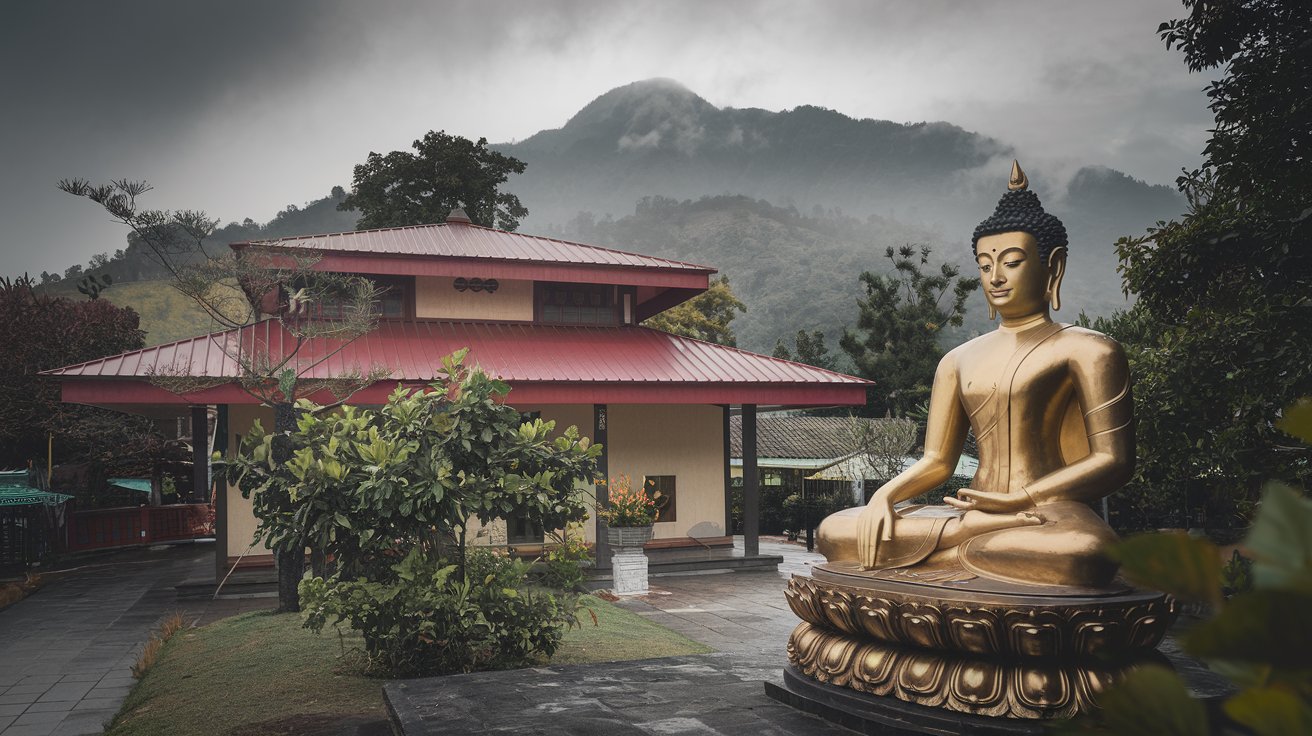
Understanding the difference between Theravada and Mahayana Buddhism is essential for anyone exploring Buddhist traditions in the United States. These two main branches of Buddhism diverged over 2,000 years ago and represent distinct philosophical approaches to achieving enlightenment. While both share core Buddhist principles, they differ significantly in their paths to liberation, scriptural traditions, and geographical presence. In 2026, approximately 1.2 million Americans practice various forms of Buddhism, with Mahayana traditions being more prevalent due to Chinese, Japanese, and Korean immigration patterns, while Theravada Buddhism maintains strong communities through Thai, Sri Lankan, and Burmese practitioners.
Historical Origins and Development of Both Traditions
The split between Theravada and Mahayana Buddhism emerged during the first few centuries after Buddha’s death around 400 BCE. Theravada, meaning the ‘Teaching of the Elders,’ claims to preserve the original teachings of Buddha through the Pali Canon, the earliest complete Buddhist scriptures. This tradition spread predominantly through South and Southeast Asia, establishing strongholds in Sri Lanka, Myanmar, Thailand, Cambodia, and Laos. By 2026, these Theravada countries maintain approximately 150 million practitioners worldwide.
Mahayana Buddhism, meaning the ‘Great Vehicle,’ developed as a reform movement between 100 BCE and 100 CE, introducing new sutras and philosophical concepts. This tradition expanded northward through the Silk Road, becoming dominant in China, Japan, Korea, Vietnam, and Tibet. The Mahayana tradition emphasizes universal salvation and the bodhisattva ideal, contrasting with Theravada’s focus on individual arhantship. In the United States during 2026, approximately 75% of Buddhist practitioners follow Mahayana-derived traditions including Zen, Pure Land, and Tibetan Buddhism, while 25% practice Theravada or Vajrayana forms.
Core Philosophical Differences Between the Traditions
The fundamental philosophical divergence centers on the concept of enlightenment and who can achieve it. Theravada Buddhism maintains that enlightenment requires monastic life and rigorous personal practice, with the arhat ideal representing the highest achievement—an individual who has eliminated all defilements and escaped the cycle of rebirth. This path emphasizes self-reliance and personal liberation through meditation, moral discipline, and wisdom cultivation.
Mahayana Buddhism introduced the revolutionary bodhisattva concept—enlightened beings who postpone their final nirvana to help all sentient beings achieve liberation. This tradition teaches that Buddha nature exists within all beings, making enlightenment accessible to laypeople, not just monks. The Mahayana path emphasizes compassion equally with wisdom, promoting the idea that individual liberation is incomplete without universal salvation. This philosophical shift made Buddhism more accessible to ordinary practitioners in countries where Mahayana spread.
Scriptural Texts and Canonical Differences
Theravada Buddhism relies exclusively on the Tripitaka (Pali Canon), comprising approximately 10,000 suttas attributed directly to Buddha and his immediate disciples. Written in Pali language, these texts include the Vinaya Pitaka (monastic rules), Sutta Pitaka (discourses), and Abhidhamma Pitaka (philosophical analysis). Theravada practitioners consider these the only authentic Buddhist scriptures, rejecting later additions as non-canonical. In 2026, complete digital versions of the Pali Canon are freely available through the Vipassana Research Institute and Access to Insight platforms, supporting American practitioners.
The Mahayana tradition accepts the Pali Canon but adds extensive additional sutras written in Sanskrit and later translated into Chinese, Tibetan, Japanese, and other languages. Key Mahayana texts include the Heart Sutra, Diamond Sutra, Lotus Sutra, and Avatamsaka Sutra, which introduce concepts absent in Theravada scriptures like emptiness (sunyata), skillful means (upaya), and the three-body doctrine of Buddha. These texts emerged between 100 BCE and 600 CE, creating a vast scriptural library. The difference in accepted scriptures represents one of the main differences between the two sects, influencing everything from meditation practices to philosophical understanding.
The Path to Enlightenment: Arhat Versus Bodhisattva
In Theravada Buddhism, the ultimate goal is becoming an arhat through the Noble Eightfold Path and mastering the Four Noble Truths. An arhat achieves complete liberation by eliminating the ten fetters binding beings to samsara, including sensual desire, ill will, and ignorance. This path typically requires monastic ordination, intensive meditation practice, and many lifetimes of spiritual development. Theravada emphasizes that enlightenment is rare and difficult, with Buddha himself being the prime example of one who discovered and walked this path independently.
The Mahayana bodhisattva path fundamentally transforms the enlightenment goal. Rather than seeking personal liberation, bodhisattvas take vows to achieve buddhahood for the benefit of all beings, accumulating merit and wisdom through the six perfections (paramitas): generosity, morality, patience, energy, meditation, and wisdom. This path extends across countless lifetimes and multiple universes, with famous bodhisattvas like Avalokiteshvara (Compassion), Manjushri (Wisdom), and Ksitigarbha (Vows) serving as celestial helpers. The bodhisattva ideal democratized Buddhism, making spiritual aspiration accessible to laypeople who could generate merit through devotion, ethical living, and compassionate action without monastic ordination.
Meditation Practices and Techniques
Theravada meditation emphasizes two primary practices: samatha (concentration) and vipassana (insight). Samatha develops deep concentration through techniques like breath awareness (anapanasati) or loving-kindness meditation (metta bhavana), leading to jhana states of absorption. Vipassana, the distinctive Theravada contribution, involves systematic observation of body sensations, feelings, mental states, and phenomena to directly perceive impermanence (anicca), suffering (dukkha), and non-self (anatta). The Mahasi Sayadaw and S.N. Goenka vipassana traditions have attracted thousands of American practitioners since the 1970s, with over 200 Theravada meditation centers operating across the United States in 2026.
Mahayana meditation practices show tremendous diversity across traditions. Zen Buddhism emphasizes zazen (sitting meditation) with practices ranging from Soto Zen’s shikantaza (just sitting) to Rinzai Zen’s koan study, designed to provoke sudden enlightenment experiences. Pure Land Buddhism focuses on nembutsu—repetitive recitation of Amitabha Buddha’s name to ensure rebirth in his pure land. Tibetan Vajrayana incorporates tantric visualizations, deity yoga, and advanced practices like tummo (inner heat) and phowa (consciousness transference). This meditation diversity reflects Mahayana’s ‘skillful means’ philosophy, adapting practices to different practitioners’ capacities and temperaments. American Zen centers alone number over 300 locations in 2026, making Zen the most visible Mahayana tradition in the United States.
Geographic Distribution and Cultural Contexts
The question of Theravada Buddhism vs Mahayana Buddhism countries reveals clear geographic patterns established over two millennia. Theravada remains the dominant tradition in Sri Lanka (70% of population), Myanmar (87%), Thailand (93%), Cambodia (97%), and Laos (65%), representing approximately 150 million practitioners. These countries preserve Theravada as state religion or primary spiritual tradition, maintaining extensive monastic networks with hundreds of thousands of ordained monks. The Theravada tradition deeply influences national identity, festivals, and social structures in these Southeast Asian nations.
Mahayana Buddhism countries include China (with approximately 250 million Buddhist practitioners mixing Pure Land, Chan, and folk traditions), Japan (84 million practitioners across Zen, Pure Land, and Nichiren schools), Korea (22% population following Seon/Zen traditions), Vietnam (blending Mahayana with ancestor worship), and Mongolia. Taiwan maintains vibrant Mahayana traditions including Humanistic Buddhism movements like Fo Guang Shan and Tzu Chi, which have established significant presences in American cities. The geographic split largely follows the ancient Silk Road transmission routes, with Theravada spreading by sea routes and Mahayana by overland trade paths. In 2026, American Buddhism reflects both traditions, with Mahayana forms more prevalent in urban areas due to East Asian immigration, while Theravada centers attract convert practitioners interested in vipassana meditation.
Is the Dalai Lama Mahayana or Theravada?
The Dalai Lama belongs to Tibetan Buddhism, which is technically classified as Vajrayana—a specialized branch that emerged from Mahayana Buddhism. However, Vajrayana maintains all core Mahayana Buddhist principles including the bodhisattva ideal, Buddha nature, and emptiness philosophy while adding tantric practices and advanced meditation techniques. The current 14th Dalai Lama, Tenzin Gyatso, explicitly identifies as Mahayana, emphasizing compassion and the bodhisattva path in his global teachings. He frequently states that Tibetan Buddhism’s foundation rests on Mahayana philosophy, particularly the Madhyamaka (Middle Way) school established by Nagarjuna.
Tibetan Buddhism incorporates four major schools—Nyingma, Kagyu, Sakya, and Gelug (the Dalai Lama’s tradition)—all sharing Mahayana doctrinal foundations while differing in lineage, practices, and textual emphasis. The tradition combines Mahayana sutras with tantric texts, creating what practitioners call the ‘union of sutra and tantra.’ This makes the question of ‘Theravada Buddhism vs Mahayana Buddhism vs Vajrayana Buddhism’ somewhat hierarchical: Vajrayana builds upon Mahayana, which historically developed from early Buddhist schools. The Dalai Lama’s influence in the United States has been substantial, with Tibetan Buddhist centers numbering over 400 locations in 2026, introducing millions of Americans to Mahayana principles through accessible teachings on compassion, mindfulness, and secular ethics.
Monastic Life and Lay Practice
Theravada Buddhism maintains strict separation between monastic and lay communities. Monks (bhikkhus) and nuns (bhikkhunis, though full ordination lineages were lost in most Theravada countries) follow 227 Vinaya rules governing every aspect of life from meals to possessions to relationships. Theravada monks cannot handle money, must eat before noon, and depend entirely on lay supporters for material needs. The monastic community (sangha) represents the primary field for generating merit, with lay practitioners supporting monks through daily alms rounds and donations. This system creates clear spiritual hierarchy: monks pursue enlightenment while laypeople accumulate merit hoping for favorable rebirth, possibly as monks in future lives. In 2026, American Theravada monasteries like Abhayagiri in California and Bhavana Society in West Virginia maintain these traditional distinctions, though adapted to American contexts.
In Mahayana traditions, the relationship between monastics and laypeople is more fluid. While Mahayana maintains monastic orders, the bodhisattva ideal applies equally to all practitioners regardless of ordination status. Japanese Buddhism introduced married clergy after the Meiji Restoration (1868), fundamentally transforming the monastic model. Zen priests in America typically marry, work jobs, and function more as spiritual teachers than renunciants. Pure Land Buddhism emphasizes lay practice through nembutsu recitation, requiring no monastic training. This accessibility partly explains why Mahayana Buddhism dominates American Buddhist demographics—it adapts more readily to Western lifestyles where extended monastic training is impractical for most practitioners. The question of whether one tradition is more strict depends on context: Theravada maintains stricter monastic discipline, while some Mahayana schools like Zen demand intense practice periods regardless of ordination status.
Zen Buddhism: Mahayana Innovation
Addressing the question ‘Is Zen Mahayana or Theravada?’ requires understanding Zen’s historical development. Zen (Chan in Chinese, Seon in Korean, Thien in Vietnamese) is definitively Mahayana Buddhism, emerging in China around the 6th century CE when Mahayana Buddhism encountered Daoist philosophy. Zen’s legendary founder, Bodhidharma, transmitted teachings emphasizing direct experience over scriptural study, famously declaring Zen as ‘a special transmission outside the scriptures, not dependent on words and letters, pointing directly to the human mind, seeing one’s nature and becoming Buddha.’
Zen Buddhism maintains core Mahayana doctrines including emptiness (sunyata), Buddha nature inherent in all beings, and the bodhisattva ideal of universal liberation. However, Zen innovated unique practices like koan study (paradoxical riddles designed to transcend conceptual thinking), zazen meditation with minimal instruction, and sudden enlightenment experiences (satori or kensho). The tradition subdivided into Rinzai Zen (emphasizing koans and sudden awakening) and Soto Zen (emphasizing shikantaza and gradual cultivation). In 2026, Zen centers across the United States number over 300, making it the most prominent Mahayana tradition among convert Buddhists, particularly attracting practitioners interested in meditation without extensive religious ceremony. Major American Zen teachers like Joan Halifax, Norman Fischer, and others have adapted traditional Japanese Zen to American contexts while maintaining Mahayana philosophical foundations.
Similarities Between Theravada and Mahayana Buddhism
Despite significant differences, Theravada and Mahayana Buddhism share fundamental teachings that unite all Buddhist traditions. Both accept the Four Noble Truths—suffering exists, suffering has causes, suffering can end, and the Noble Eightfold Path leads to suffering’s cessation. Both traditions revere Siddhartha Gautama as the historical Buddha who achieved enlightenment under the Bodhi tree and taught for 45 years. Both accept core doctrines of karma (intentional action creating consequences), rebirth through six realms (gods, demigods, humans, animals, hungry ghosts, hell beings), and the Three Marks of Existence (impermanence, suffering, non-self).
Both traditions emphasize meditation and ethical conduct as essential spiritual practices. The Five Precepts—abstaining from killing, stealing, sexual misconduct, false speech, and intoxicants—guide lay practitioners in both schools. Both recognize the importance of the Triple Gem (Buddha, Dharma, Sangha) as objects of refuge. Both teach that attachment and ignorance cause suffering, and both aim to cultivate wisdom, compassion, and liberation from the cycle of rebirth. These similarities between Theravada and Mahayana Buddhism reflect their shared origin in Buddha’s teachings, with differences emerging from how these core principles are interpreted, emphasized, and practiced across cultural and historical contexts. A Venn diagram of Theravada and Mahayana Buddhism would show substantial overlap in fundamental principles with divergence in paths, scriptures, and ultimate goals.
Understanding the Hinayana Controversy
The term ‘Hinayana’ (Lesser Vehicle) appears frequently in discussions of Theravada Buddhism vs Mahayana Buddhism vs Hinayana, but requires careful contextualization. Early Mahayana Buddhists coined this term to contrast their ‘Mahayana’ (Great Vehicle) with earlier Buddhist schools, implying that these traditions offered a lesser path focused on individual liberation rather than universal salvation. However, modern scholars and practitioners consider ‘Hinayana’ a pejorative term that misrepresents and disrespects Theravada Buddhism.
Theravada Buddhism is not synonymous with Hinayana, though it descends from early Buddhist schools that Mahayana texts sometimes criticized. The term ‘Hinayana’ historically referred to various early Buddhist schools (approximately 18 different schools existed), of which Theravada is the sole surviving tradition. Contemporary Buddhist discourse in 2026 recognizes this terminology as sectarian and outdated. Respectful comparative discussions now use Theravada and Mahayana as neutral descriptive terms rather than value judgments about superiority. Major Buddhist organizations, including the Dalai Lama’s teachings, explicitly reject ‘Hinayana’ terminology, acknowledging that Theravada preserves authentic Buddhist teachings through its careful maintenance of the Pali Canon and monastic discipline. American Buddhist communities increasingly emphasize inter-traditional dialogue, recognizing that both paths offer valid approaches to Buddhist practice suited to different temperaments and cultural contexts.
Buddhism in the United States: 2026 Demographics
The American Buddhist landscape in 2026 reflects both Theravada and Mahayana traditions, with distinct demographic patterns. Approximately 1.2 million Americans identify as Buddhist, with an additional 2-3 million practicing Buddhist meditation without formal religious identification. Asian-American Buddhists, primarily following Mahayana traditions from Chinese, Japanese, Korean, Vietnamese, and Taiwanese backgrounds, comprise roughly 60% of American Buddhists. These communities maintain traditional temple-based practices, often blending Pure Land, Zen, and cultural elements.
Convert Buddhists, predominantly European-American, comprise approximately 40% of practitioners and show different patterns. Among converts, Theravada vipassana meditation attracts significant interest through organizations like Spirit Rock Meditation Center, Insight Meditation Society, and hundreds of urban meditation groups. However, Zen Buddhism remains the most practiced Mahayana tradition among converts, with over 300 centers offering zazen instruction. Tibetan Buddhism, introduced by the Dalai Lama’s 1959 exile, maintains 400+ centers teaching Vajrayana practices rooted in Mahayana philosophy. The difference in Theravada Buddhism vs Mahayana Buddhism demographics reflects immigration patterns, with Mahayana dominance due to East Asian immigration, while Theravada grows through convert interest in vipassana meditation. Contemporary American Buddhism increasingly emphasizes cross-tradition dialogue, with teachers drawing from multiple lineages to address secular mindfulness, social justice, and accessible meditation instruction adapted to Western psychological frameworks.
Related video about theravada buddhism vs mahayana buddhism
This video complements the article information with a practical visual demonstration.
FAQ – Common Questions
Is Theravada or Mahayana more strict in practice requirements?
Theravada Buddhism maintains stricter monastic discipline with 227 Vinaya rules governing monk behavior, prohibiting money handling, requiring celibacy, and limiting meals to before noon. However, Mahayana Zen traditions can be equally demanding during intensive practice periods like sesshin retreats, requiring 10-15 hours daily meditation for weeks. The strictness depends on context: Theravada emphasizes monastic rigor, while certain Mahayana schools demand intense lay practice. Neither tradition is inherently ‘more strict’—they emphasize different aspects of Buddhist discipline suited to their philosophical approaches to enlightenment.
Can you practice both Theravada and Mahayana Buddhism simultaneously?
Yes, practitioners can integrate elements from both Theravada and Mahayana Buddhism, though traditionally they represent distinct paths. Many contemporary Western Buddhists practice Theravada vipassana meditation while embracing Mahayana compassion teachings and bodhisattva ideals. Some teachers like Thich Nhat Hanh blended both traditions explicitly. However, traditionally minded practitioners prefer staying within one lineage to maintain doctrinal consistency and proper teacher-student transmission. The question ultimately depends on individual goals—scholarly understanding benefits from comparative study, while deep realization typically requires commitment to a single tradition’s complete path and practices under qualified guidance.
Which Buddhist tradition is better for beginners in the United States?
Neither Theravada nor Mahayana Buddhism is objectively better for beginners—the choice depends on personal inclination and available resources. Theravada vipassana meditation offers straightforward technique-focused instruction through organizations like Spirit Rock and Insight Meditation Society, appealing to practitioners interested in secular mindfulness applications. Mahayana Zen provides minimalist meditation instruction with aesthetic appeal, while Tibetan Buddhism offers rich symbolism and detailed philosophical frameworks. In 2026, most American cities offer both traditions. Beginners should visit local centers, try different meditation styles, and assess which community, teaching approach, and philosophical framework resonates personally. Many teachers recommend starting with basic mindfulness practice common to both traditions before committing to specific lineages.
Do Theravada and Mahayana Buddhists recognize each other as legitimate?
Yes, contemporary Theravada and Mahayana Buddhists mutually recognize each other as authentic Buddhist traditions, though historically tensions existed. The 1967 World Buddhist Sangha Council explicitly acknowledged multiple Buddhist schools as valid expressions of Buddha’s teachings. The Dalai Lama frequently praises Theravada’s preservation of Vinaya discipline and early Buddhist texts. Theravada leaders like Ajahn Chah respected Mahayana teachings while maintaining their own tradition. In 2026, inter-traditional Buddhist dialogue is common in the United States, with conferences, shared meditation retreats, and collaborative social action. Both traditions now emphasize their shared foundation in Buddha’s core teachings while respecting different interpretations and practices developed across 2,500 years of Buddhist history.
What are the main countries where Theravada Buddhism is practiced today?
Theravada Buddhism countries include Sri Lanka (where it arrived in the 3rd century BCE), Myanmar (87% Buddhist population), Thailand (93% Buddhist, state religion), Cambodia (97% Buddhist, recovering from Khmer Rouge persecution), and Laos (65% Buddhist population). Theravada minorities also exist in Bangladesh, Southwest China, Vietnam’s Khmer regions, and Malaysia. These countries maintain extensive monastic networks with hundreds of thousands of ordained monks preserving Pali texts and traditional practices. In 2026, approximately 150 million people practice Theravada Buddhism worldwide, with growing convert communities in Western countries attracted to vipassana meditation and early Buddhist teachings preserved in the Pali Canon.
How does Buddha nature differ between Theravada and Mahayana?
The concept of Buddha nature represents a fundamental philosophical difference between traditions. Theravada Buddhism does not teach inherent Buddha nature; instead, beings possess the potential to become enlightened through practice, but this requires eliminating defilements accumulated over countless lifetimes. Enlightenment is an achievement, not an uncovering of pre-existing nature. Mahayana Buddhism introduced the revolutionary teaching that all sentient beings possess inherent Buddha nature (tathagatagarbha)—enlightenment is already present but obscured by ignorance and defilements. This Mahayana doctrine democratizes enlightenment, suggesting that awakening involves recognizing one’s true nature rather than achieving something fundamentally new. This philosophical difference influences everything from meditation approach to the accessibility of enlightenment for laypeople versus monastics.
| Aspect | Theravada Buddhism | Mahayana Buddhism |
|---|---|---|
| Geographic Distribution | Sri Lanka, Myanmar, Thailand, Cambodia, Laos (150 million practitioners) | China, Japan, Korea, Vietnam, Tibet (500+ million practitioners) |
| Primary Scriptures | Pali Canon (Tripitaka) exclusively | Pali Canon plus Mahayana sutras (Heart Sutra, Lotus Sutra, etc.) |
| Enlightenment Goal | Arhat (individual liberation from rebirth) | Bodhisattva (universal salvation of all beings) |
| Path Emphasis | Personal discipline, monastic life, vipassana meditation | Compassion, skillful means, accessible practices for laypeople |
| Buddha Nature | Potential to achieve enlightenment through practice | Inherent Buddha nature in all sentient beings |
| US Presence (2026) | 200+ centers, primarily vipassana meditation focused | 700+ centers (Zen, Tibetan, Pure Land traditions) |
| Monastic Practice | Strict Vinaya discipline, celibate monks, alms rounds | Varied (married Japanese priests, celibate Tibetan monks) |
| Key Meditation | Vipassana (insight) and samatha (concentration) | Zazen (Zen), visualization (Tibetan), nembutsu (Pure Land) |