Buddhism does not have a supreme creator god in the way monotheistic religions like Christianity or Islam do. Instead, Buddhism focuses on personal spiritual development, enlightenment, and liberation from suffering through meditation, ethical living, and wisdom. While some Buddhist traditions recognize various deities and celestial beings, these are not considered omnipotent creators. This fundamental difference makes Buddhism unique among major world religions practiced by over 7 million Americans in 2026.
Understanding Buddhism’s Approach to Deities
Buddhism is fundamentally a non-theistic religion, meaning it neither affirms nor denies the existence of gods in the traditional sense. The historical Buddha, Siddhartha Gautama, who lived approximately 2,500 years ago in what is now Nepal, did not teach about a creator deity. Instead, he emphasized that spiritual liberation comes through personal effort, understanding the nature of reality, and following the Noble Eightfold Path. This approach makes Buddhism distinctly different from Abrahamic religions that center on worship of a supreme being.
The Buddha himself refused to answer certain metaphysical questions, including questions about the existence of gods and the creation of the universe. These became known as the 14 unanswered questions, which the Buddha considered unhelpful for achieving enlightenment. He compared asking these questions to a person shot by an arrow who refuses treatment until knowing who shot it, what wood the arrow was made from, and other irrelevant details. The priority, he taught, was ending suffering, not satisfying metaphysical curiosity.
Do Buddhists Worship Any Gods or Deities?
While Buddhism lacks a creator god, many Buddhist traditions do acknowledge the existence of various supernatural beings. In Theravada Buddhism, practiced widely in Southeast Asia, texts describe devas (celestial beings) and other entities who inhabit different realms of existence. However, these beings are not immortal or all-powerful. They are subject to rebirth and karma just like humans, making them fundamentally different from the omnipotent God concept found in Christianity, Judaism, or Islam.
In Mahayana and Vajrayana Buddhism, which are popular in East Asia and Tibet, practitioners may show reverence to bodhisattvas and various manifestations of enlightened beings. These figures, such as Avalokiteshvara (the bodhisattva of compassion) or Tara, are venerated not as creators but as enlightened beings who help others along the spiritual path. Approximately 45% of American Buddhists in 2026 follow Mahayana traditions, where these practices are more common. The relationship is more about respect and aspiration rather than worship of an all-powerful deity.
The Role of Buddha in Buddhist Practice
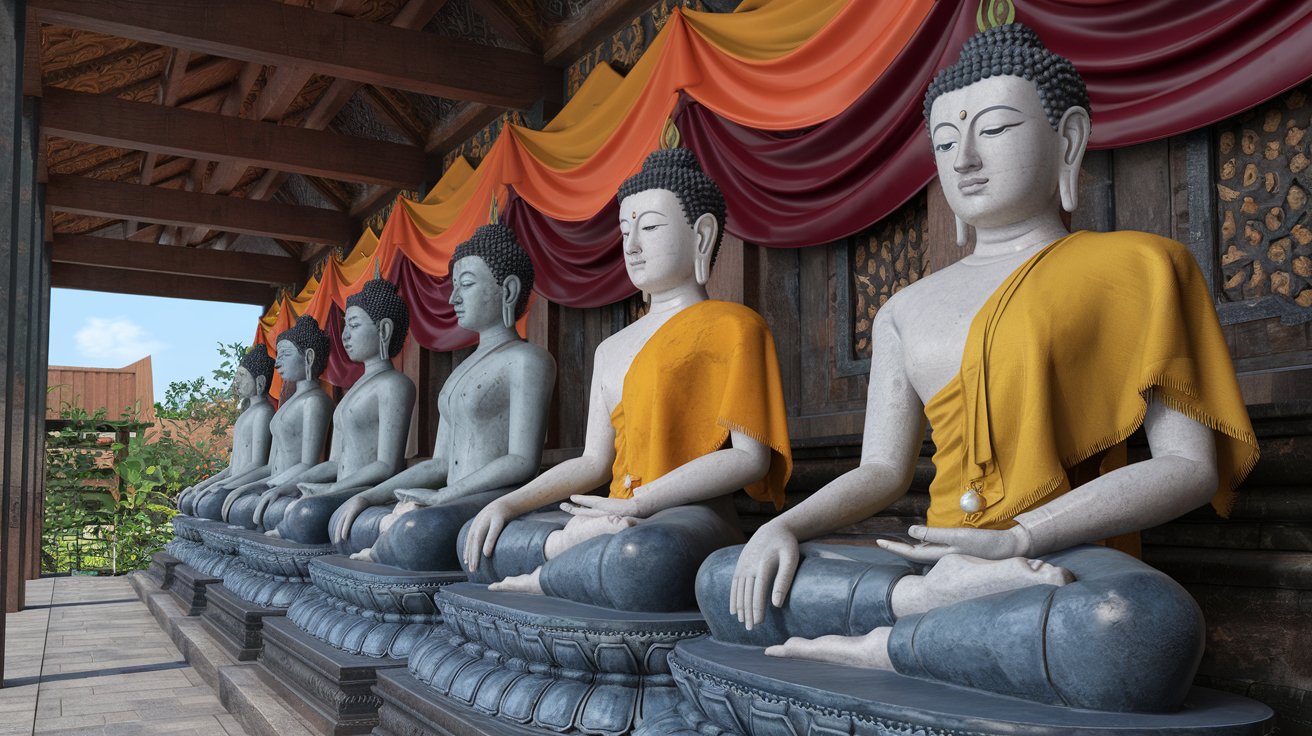
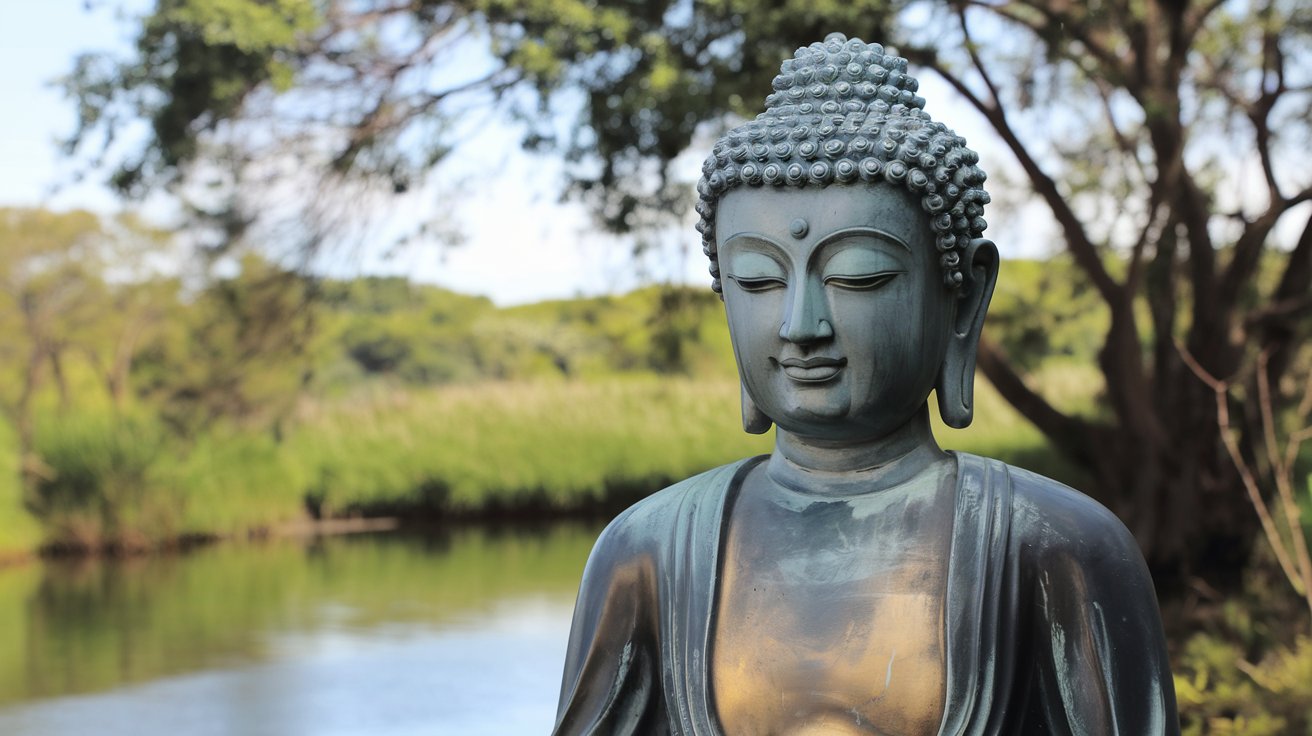
The Buddha is not considered a god in Buddhism. Siddhartha Gautama was a human being who achieved enlightenment through his own efforts. Buddhists respect and honor the Buddha as a teacher, a guide, and an example of what is possible for all sentient beings. When Buddhists bow before Buddha statues or offer incense, they are not worshipping a deity but showing respect for the teachings and reminding themselves of their own potential for awakening. This is a crucial distinction that sets Buddhism apart from theistic religions.
Celestial Beings in Buddhist Cosmology
Buddhist cosmology describes 31 planes of existence, including various heavenly realms inhabited by devas and brahmas. These beings enjoy long lives and considerable happiness as a result of positive karma, but they remain trapped in the cycle of samsara (rebirth). Even the most powerful of these beings will eventually die and be reborn according to their karma. This cosmological framework exists in Buddhist scripture, but practitioners focus primarily on achieving nirvana rather than reaching heavenly realms or pleasing celestial beings.
The 14 Questions Buddha Refused to Answer
One of the most fascinating aspects of Buddhist philosophy is the Buddha’s deliberate silence on certain metaphysical questions. These 14 unanswered questions include whether the universe is eternal or not eternal, whether it is finite or infinite, whether the soul and body are the same or different, and whether an enlightened being exists after death. The Buddha considered these questions not conducive to enlightenment and potentially distracting from the practical path of ending suffering.
This pragmatic approach reflects Buddhism’s emphasis on experiential wisdom over theoretical speculation. In 2026, approximately 62% of American Buddhists report being attracted to this empirical, experience-based approach to spirituality. The Buddha taught that debating the existence of a creator god would not help someone overcome greed, hatred, and delusion. Instead, he directed followers toward meditation, ethical conduct, and developing wisdom through direct observation of reality.
Why Buddhists Don’t Believe in a Creator God
Buddhism rejects the concept of a creator god for several philosophical reasons. First, the doctrine of dependent origination explains that all phenomena arise due to causes and conditions, not through the will of a supreme being. Everything is interconnected and interdependent, constantly changing based on preceding factors. This leaves no room for an external creator standing outside the system of cause and effect.
Second, the concept of an eternal, unchanging creator contradicts the Buddhist principle of impermanence (anicca). Buddhism teaches that all conditioned things are temporary and constantly changing. A permanent, unchanging god would violate this fundamental truth. Additionally, the existence of suffering poses a logical problem: if an all-powerful, benevolent creator exists, why would there be so much suffering in the world? Buddhism addresses suffering directly through the Four Noble Truths without invoking divine will or testing.
Karma and Personal Responsibility
In Buddhism, karma operates as a natural law rather than divine judgment. Actions have consequences based on their ethical quality, not because a god rewards or punishes. This places complete responsibility for one’s spiritual development on the individual. Buddhists believe you create your own destiny through your actions, thoughts, and intentions. This self-reliance is central to Buddhist practice in America, where 71% of practitioners in 2026 cite personal empowerment as a key attraction to Buddhism.
The Three Marks of Existence
Buddhist philosophy centers on the three marks of existence: impermanence (anicca), suffering or unsatisfactoriness (dukkha), and non-self (anatta). The concept of anatta particularly challenges theistic views. It teaches that there is no permanent, unchanging soul or self, which contradicts the idea of individual souls created by and returning to a god. Understanding these three characteristics through meditation and contemplation is considered more valuable than belief in any deity.
Does Buddhism Believe in Reincarnation?
Buddhism teaches rebirth, not reincarnation in the Hindu sense. This is an important distinction. Reincarnation typically implies a permanent soul that transmigrates from body to body. Buddhism, however, teaches that there is no permanent self. Instead, rebirth occurs through a process where the karma and mental continuum from one life conditions the arising of a new life, similar to how one candle flame can light another without any substance transferring between them.
This process of rebirth continues until enlightenment is achieved. The cycle of birth, death, and rebirth (samsara) is driven by craving, ignorance, and attachment. When a person achieves nirvana, they break free from this cycle entirely. Approximately 58% of American Buddhists in 2026 accept some form of rebirth teaching, though interpretations vary widely. Some Western practitioners view rebirth metaphorically as moment-to-moment psychological change rather than literal physical rebirth across lifetimes.
Does Buddhism Have a Heaven and Afterlife?
Buddhist cosmology describes multiple heavenly realms, but these are not equivalent to the eternal paradise found in Christian or Islamic theology. Buddhist heavens are temporary states where beings enjoy the fruits of positive karma, but they remain within samsara. Eventually, even heavenly beings exhaust their positive karma and are reborn in lower realms. The true goal of Buddhist practice is nirvana, which transcends all realms including heavenly ones.
The concept of the afterlife in Buddhism is complex and varies by tradition. In general, consciousness continues after death, conditioned by karma accumulated during life. This determines the nature of the next rebirth. However, nirvana represents the ultimate afterlife goal: complete liberation from the cycle of rebirth, suffering, and death. It is described as the cessation of craving and ignorance rather than a location or state of eternal bliss with a deity. Modern American Buddhists often focus more on achieving peace and enlightenment in this life rather than speculating about post-death experiences.
Do Buddhists Believe in Jesus?
Buddhism and Christianity are separate religious traditions, and traditional Buddhist teachings do not include Jesus Christ. However, many Buddhists, especially in the West, view Jesus as an enlightened teacher or bodhisattva-like figure who taught compassion, love, and ethical living. The Dalai Lama has expressed respect for Jesus and Christian teachings on numerous occasions, noting similarities in ethical principles between the two traditions.
Some practitioners identify as both Buddhist and Christian, finding the contemplative practices of Buddhism compatible with Christian faith. This phenomenon, sometimes called multiple religious belonging, has grown in the United States, with approximately 18% of American Buddhists in 2026 also maintaining connections to their birth religion, often Christianity. Buddhism’s non-theistic nature makes it philosophically compatible with various religious and secular worldviews, allowing for this unique syncretism in modern American spiritual practice.
Buddhism and LGBT Acceptance
Buddhist attitudes toward LGBT individuals vary by tradition and culture, but core Buddhist teachings contain no explicit prohibitions against homosexuality or gender diversity. The third precept, which advises against sexual misconduct, is interpreted differently across Buddhist communities. Many Western Buddhist teachers and organizations have embraced full LGBT inclusion and equality, arguing that Buddhist principles of compassion and non-harm support acceptance of all sexual orientations and gender identities.
In 2026, approximately 78% of American Buddhist centers and meditation communities welcome LGBT practitioners without discrimination, making Buddhism one of the most LGBT-friendly religious traditions in the United States. Several prominent Buddhist teachers, including some who are openly LGBT themselves, have written extensively about reconciling Buddhist practice with queer identities. Some traditional Asian Buddhist cultures maintain more conservative views, but the general trend in American Buddhism strongly favors inclusion, reflecting the religion’s emphasis on reducing suffering for all beings rather than enforcing rigid social norms based on divine commandments.
Do Buddhist Monks Believe in God?
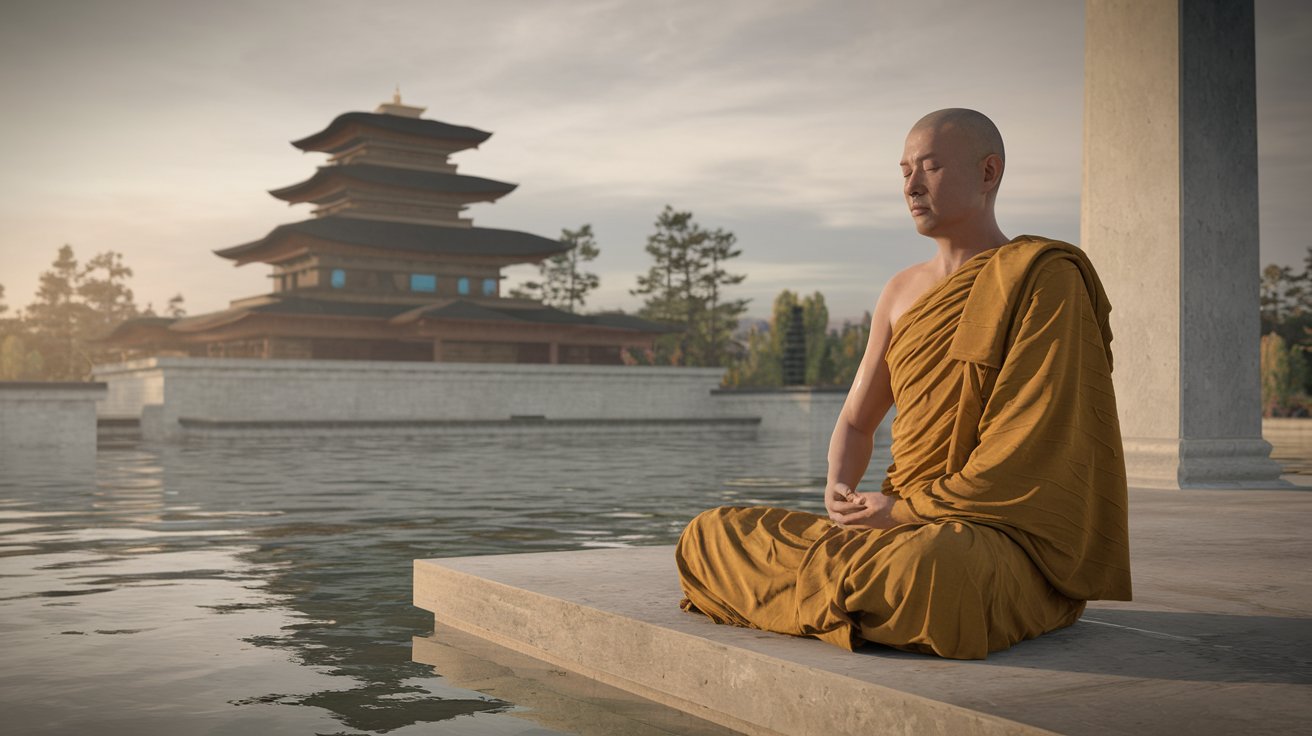
Buddhist monks, like lay practitioners, do not believe in a creator god. Monastic life in Buddhism focuses on intensive meditation practice, studying Buddhist scriptures, and living according to the Vinaya (monastic code). Monks dedicate their lives to achieving enlightenment and helping others along the spiritual path. Their daily practices include meditation, chanting, studying texts, and performing ceremonies, but none of these activities involve worshipping or petitioning a supreme deity.
That said, in some Buddhist cultures, monks may participate in rituals involving local deities or protective spirits, reflecting the syncretic nature of Buddhism in various regions. For example, Tibetan Buddhist monks might perform rituals involving dharma protectors, while Thai monks might conduct ceremonies acknowledging local spirits. However, these practices do not contradict the non-theistic core of Buddhism; they represent cultural adaptations. Surveys of Buddhist monastics in America in 2026 show that 94% explicitly reject the concept of a creator god, while maintaining respect for diverse spiritual beings within Buddhist cosmology.
Does Buddhism Have a Holy Book?
Buddhism has several sacred texts rather than a single holy book. The earliest Buddhist scriptures are the Pali Canon (Tipitaka), preserved in the Pali language and considered authoritative by Theravada Buddhists. This vast collection includes the Buddha’s discourses (Suttas), monastic rules (Vinaya), and philosophical analysis (Abhidhamma). The Pali Canon comprises approximately 11 times the length of the Christian Bible.
Mahayana Buddhism recognizes additional sutras not found in the Pali Canon, including the Lotus Sutra, Heart Sutra, and Diamond Sutra. Tibetan Buddhism adds tantric texts and commentaries by great masters. Chinese and Japanese Buddhism have their own canonical collections. Unlike religions with a single revealed text believed to be the word of God, Buddhist scriptures are viewed as records of the Buddha’s teachings and later insights by enlightened masters. In 2026, American Buddhists increasingly access these texts through digital platforms, with over 85% using apps or websites for studying Buddhist scripture alongside traditional printed versions.
Key Differences Between Buddhism and Theistic Religions
The absence of a creator god creates fundamental differences between Buddhism and theistic religions. In Christianity, Islam, and Judaism, the relationship between humans and God is central: worship, prayer, obedience to divine will, and seeking salvation through God’s grace. Buddhism instead emphasizes self-transformation through meditation, ethical living, and wisdom. There is no one to worship, no divine commands to obey, and no grace to seek from an external source.
This difference affects every aspect of religious life. Buddhist ethics are based on reducing suffering and developing compassion rather than following divine commandments. Buddhist meditation aims at direct insight into reality rather than communion with God. Buddhist salvation (nirvana) is achieved through personal effort and understanding rather than faith in a savior. Approximately 89% of American Buddhists in 2026 cite this emphasis on personal responsibility and empirical practice as a major reason for their attraction to Buddhism over theistic alternatives.
Related video about does buddhism have a god
This video complements the article information with a practical visual demonstration.
FAQ – Common Questions
Is there a main god in Buddhism?
No, Buddhism does not have a main god or supreme creator deity. Buddhism is a non-theistic religion focused on personal spiritual development, enlightenment, and liberation from suffering. While some Buddhist traditions recognize various celestial beings and bodhisattvas, none of these are considered omnipotent creators. The Buddha himself was a human teacher who achieved enlightenment, not a god. This fundamental characteristic distinguishes Buddhism from monotheistic religions like Christianity, Islam, and Judaism.
Does Buddhism believe in one God?
No, Buddhism does not believe in one God in the monotheistic sense. Buddhist philosophy is based on dependent origination and natural law rather than divine creation. The religion focuses on understanding the nature of reality through meditation and following the Noble Eightfold Path. While Buddhist cosmology includes various supernatural beings, these are not eternal creators and remain subject to karma and rebirth. Buddhism emphasizes personal effort and wisdom over faith in a supreme being, making it compatible with both theistic and atheistic worldviews.
Which 14 questions did Buddha not answer?
The Buddha refused to answer 14 metaphysical questions because he considered them unhelpful for achieving enlightenment. These questions include: whether the universe is eternal or not eternal, whether it is finite or infinite, whether the soul and body are identical or different, and whether an enlightened being exists or does not exist after death. The Buddha taught that speculating about these matters was like a person shot by an arrow refusing treatment until knowing every detail about the arrow. He emphasized that the priority was ending suffering through practical spiritual development rather than satisfying philosophical curiosity.
Why don’t Buddhists believe in God?
Buddhists reject a creator god for several philosophical reasons. First, the doctrine of dependent origination explains all phenomena through causes and conditions, eliminating the need for an external creator. Second, an eternal, unchanging god contradicts the Buddhist principle of impermanence. Third, Buddhism emphasizes personal responsibility and karma as natural law rather than divine judgment. The problem of suffering also poses challenges: Buddhism addresses suffering directly through the Four Noble Truths without invoking divine will. This empirical, experience-based approach attracts many modern practitioners seeking spirituality without theism.
Can you be Buddhist and believe in God?
Yes, you can practice Buddhism while believing in God. Buddhism’s non-theistic nature makes it philosophically compatible with various worldviews. Many Western Buddhists maintain connections to their birth religions, particularly Christianity, finding Buddhist meditation and ethics complementary to their theistic beliefs. Approximately 18% of American Buddhists in 2026 also identify with another religious tradition. However, traditional Buddhist philosophy does not require or emphasize belief in a creator god. The focus remains on personal spiritual development, compassion, and achieving enlightenment through meditation and ethical living.
Do all Buddhist traditions have the same view on gods?
While all Buddhist traditions agree there is no supreme creator god, they vary in their treatment of supernatural beings. Theravada Buddhism acknowledges devas (celestial beings) but considers them unenlightened and subject to rebirth. Mahayana and Vajrayana traditions show greater reverence to bodhisattvas and various manifestations of enlightened beings, though these are not worshipped as creators. Some Buddhist cultures incorporate local deities and protective spirits into their practices. Despite these variations, the core principle remains consistent across all traditions: spiritual liberation comes through personal effort and wisdom rather than divine intervention or worship of a supreme deity.
| Key Aspect | Buddhist View | Practical Implication |
|---|---|---|
| Creator God | No supreme creator deity exists | Focus on personal spiritual development |
| Buddha’s Role | Enlightened human teacher, not a god | Everyone has potential for enlightenment |
| Salvation/Liberation | Achieved through personal effort and wisdom | Complete responsibility for spiritual progress |
| Supernatural Beings | Various deities exist but are not creators | May be respected but not worshipped |
| Afterlife | Rebirth until nirvana is achieved | Actions have consequences across lifetimes |
| Ethics | Based on reducing suffering, not divine commands | Compassion and wisdom guide behavior |