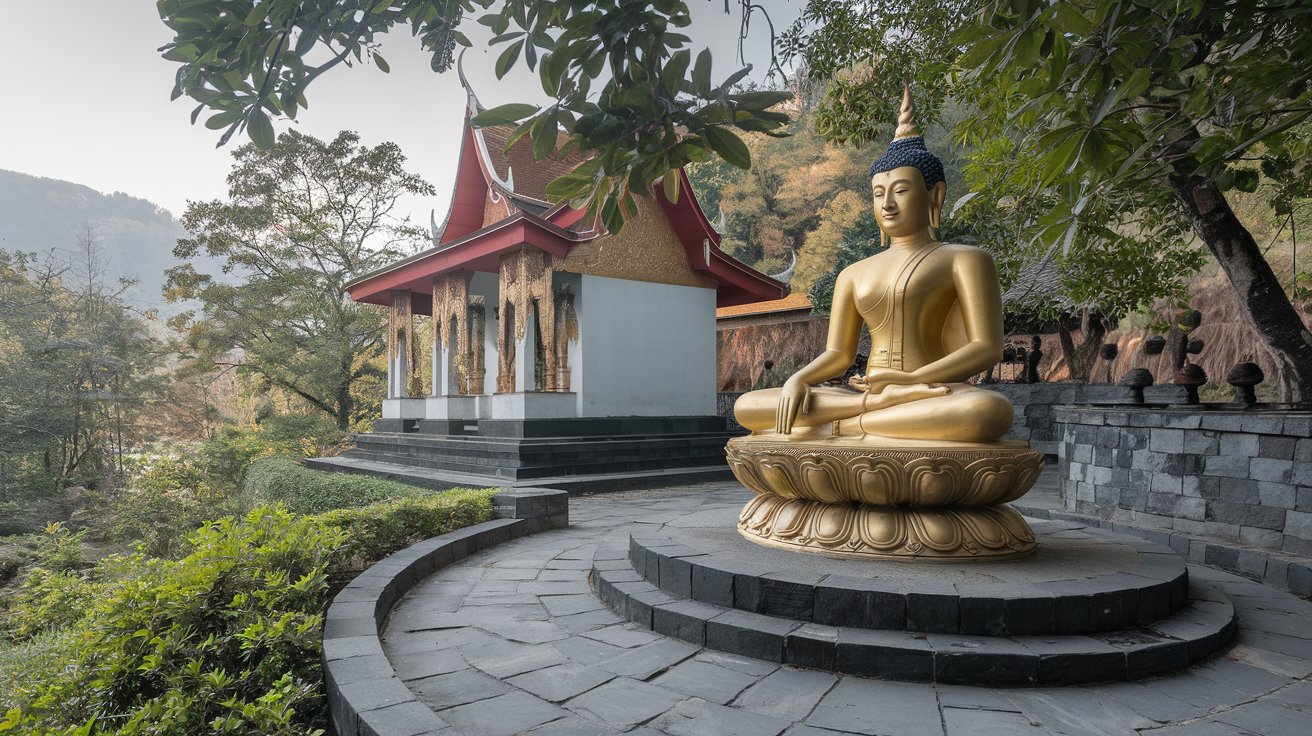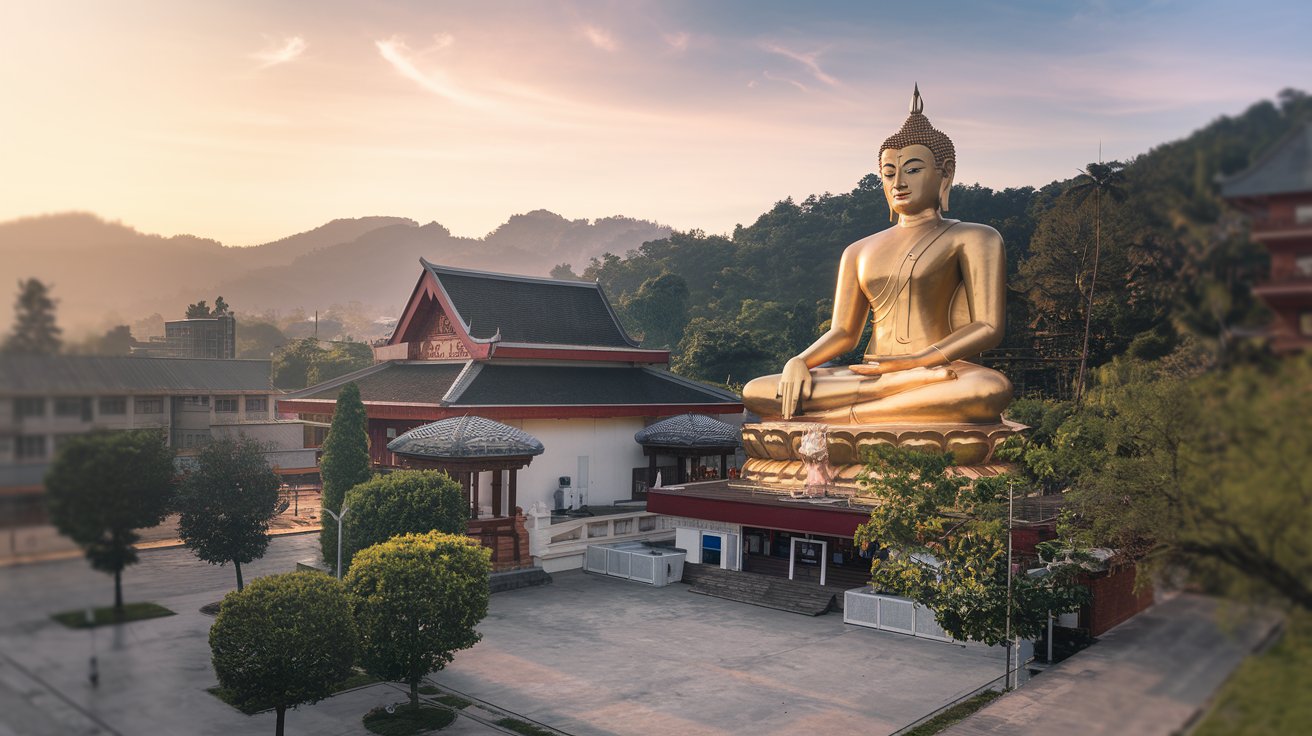
The question of whether Buddhism is a religion has sparked debate among scholars, practitioners, and spiritual seekers for decades. Unlike many Western religions, Buddhism does not require belief in a creator God, which leads some to classify it as a philosophy rather than a religion. However, with approximately 535 million adherents worldwide in 2026 and established rituals, sacred texts, and spiritual communities, Buddhism exhibits all the hallmarks of an organized religion. Understanding this distinction requires examining Buddhism’s core beliefs, practices, and how it compares to traditional religious frameworks.
Defining Buddhism: Religion, Philosophy, or Both?
Buddhism occupies a unique space in the landscape of world religions and philosophical systems. Founded in the 6th century BCE by Siddhartha Gautama in what is now Nepal, Buddhism functions as both a religion and a philosophy depending on how practitioners engage with its teachings. In the United States, where approximately 1.2% of the population (about 4 million people) identify as Buddhist in 2026, this dual nature becomes particularly evident as people adopt Buddhist practices without necessarily embracing all religious aspects.
The religious dimensions of Buddhism include devotional practices, monastic traditions, sacred rituals, meditation ceremonies, and veneration of the Buddha and bodhisattvas. Temples across the United States conduct regular worship services, observe holy days like Vesak (Buddha’s birthday), and maintain ordained clergy. Meanwhile, the philosophical aspects of Buddhism encompass its psychological insights, ethical teachings, and logical frameworks for understanding reality, suffering, and liberation. Many Americans engage with Buddhist meditation techniques, mindfulness practices, and moral principles without participating in religious ceremonies, demonstrating Buddhism’s flexibility as both a spiritual path and practical philosophy.
How Buddhism Functions as a Religion Without God
One of the most distinctive features of Buddhism as a non-theistic religion is its absence of a creator deity or supreme god who controls the universe. This characteristic distinguishes Buddhism from Abrahamic religions like Christianity, Islam, and Judaism, yet it doesn’t disqualify Buddhism from being considered a religion. In 2026, religious scholars continue to recognize that religion encompasses more than belief in God—it includes shared practices, ethical codes, sacred narratives, and communities united by spiritual pursuits.
Buddhism focuses on the Dharma (the Buddha’s teachings) rather than worship of a deity. The Buddha himself explicitly rejected questions about the existence of a supreme creator as irrelevant to the path of liberation. Instead, Buddhist practice centers on personal transformation through meditation, ethical conduct, and wisdom cultivation. The religion provides a comprehensive framework addressing life’s fundamental questions: the nature of suffering, the path to happiness, ethical living, and ultimate liberation. Approximately 67% of American Buddhists in 2026 report that Buddhism’s non-theistic approach attracted them to the tradition, particularly those seeking spiritual meaning outside conventional religious structures.
Core Buddhist Beliefs and Religious Practices
The foundation of Buddhist religious doctrine rests on several key principles that guide practitioners toward enlightenment and liberation from suffering. These beliefs form a cohesive spiritual system recognized by religious institutions, academic scholars, and legal frameworks worldwide as constituting a legitimate religion with protected status under religious freedom laws in the United States.
The Four Noble Truths: Buddhism’s Foundation
The Four Noble Truths represent the cornerstone of Buddhist teaching and religious understanding. First, the Truth of Suffering (Dukkha) acknowledges that dissatisfaction, pain, and impermanence characterize existence. Second, the Truth of the Origin of Suffering identifies craving and attachment as the root causes. Third, the Truth of Cessation declares that ending suffering is possible through nirvana. Fourth, the Truth of the Path outlines the Eightfold Path as the method for achieving liberation. These truths provide a diagnostic and prescriptive framework similar to medical treatment—identifying the problem, determining its cause, confirming a cure exists, and prescribing treatment. In 2026, Buddhist centers across America teach these truths as fundamental religious doctrine during introductory courses and meditation retreats.
Karma, Rebirth, and the Cycle of Samsara
Central to Buddhist religious cosmology are the interconnected concepts of karma, rebirth, and samsara. Karma refers to the law of moral causation—intentional actions create consequences that shape future experiences. Unlike deterministic fate, Buddhist karma emphasizes personal responsibility and the power to create positive change through ethical choices. Rebirth (distinct from Hindu reincarnation) describes how consciousness continues after death, taking new form based on accumulated karma. Samsara represents the cycle of birth, death, and rebirth characterized by suffering. Survey data from 2026 indicates that approximately 73% of American Buddhists believe in some form of rebirth, while others interpret these teachings metaphorically as psychological patterns repeating within a single lifetime, demonstrating Buddhism’s adaptability to modern scientific worldviews.
The Eightfold Path and Buddhist Ethics
The Noble Eightfold Path constitutes Buddhism’s ethical and practical roadmap to liberation, encompassing Right View, Right Intention, Right Speech, Right Action, Right Livelihood, Right Effort, Right Mindfulness, and Right Concentration. These eight components are traditionally grouped into three categories: wisdom (View and Intention), ethical conduct (Speech, Action, and Livelihood), and mental discipline (Effort, Mindfulness, and Concentration). This comprehensive system addresses thought, word, and deed, providing moral guidance comparable to religious commandments in other traditions. American Buddhist communities in 2026 often frame these principles using contemporary language—mindful communication, ethical consumption, sustainable careers, and contemplative practice—making ancient teachings accessible to modern practitioners while maintaining their essential religious character.
Buddhism Compared to Christianity and Other Religions
When examining whether Buddhism qualifies as a religion like Christianity, significant structural and theological differences emerge alongside surprising similarities. Both traditions maintain sacred scriptures, ordained clergy, ethical codes, ritual practices, and institutional hierarchies. However, their theological foundations diverge substantially. Christianity centers on faith in God, salvation through Jesus Christ, and divine grace, while Buddhism emphasizes personal effort, direct experience, and self-transformation without relying on divine intervention.
In the United States during 2026, approximately 18% of Buddhists also identify with another religion, most commonly Christianity, creating a unique phenomenon of dual religious belonging. This syncretism demonstrates Buddhism’s philosophical flexibility while raising questions about exclusive religious identity. Christianity generally requires exclusive commitment to Christ as the sole path to salvation, whereas Buddhism’s non-theistic framework allows practitioners to incorporate teachings without necessarily rejecting other spiritual traditions. Both religions address fundamental human concerns—suffering, meaning, morality, and transcendence—but through different frameworks: Christianity through divine relationship and grace, Buddhism through personal insight and ethical practice.
Buddhism’s Origins from Hinduism and Unique Development
Understanding whether Buddhism is a religion derived from Hinduism requires examining the historical context of 6th century BCE India, where Siddhartha Gautama developed his teachings within a predominantly Hindu cultural environment. Buddhism emerged as a reform movement challenging certain Hindu practices, particularly the caste system, ritualistic sacrifice, and Brahmanical authority. The Buddha retained and reinterpreted Hindu concepts like karma, rebirth, and meditation while rejecting the authority of the Vedas, the existence of an eternal soul (atman), and the supremacy of the Brahmin caste.
This historical relationship means Buddhism shares vocabulary and conceptual frameworks with Hinduism while developing distinctly different doctrines. Both religions accept karma and rebirth, but Buddhism’s understanding differs significantly—denying a permanent self that transmigrates. In 2026, scholars classify Buddhism as a separate world religion rather than a Hindu sect, recognizing its unique identity developed over 2,600 years. The relationship resembles Christianity’s emergence from Judaism—sharing historical roots and certain concepts while constituting a fundamentally distinct religious tradition. Modern American Buddhist communities, representing diverse Asian traditions and Western converts, demonstrate Buddhism’s evolution into a global religion independent of its Hindu origins.
Buddhism as a Religion Across Different Cultures
The question of whether Buddhism functions as a religion receives different answers across cultural contexts, with Asian Buddhist-majority countries and Western nations demonstrating varying approaches to Buddhist identity and practice. This cultural variation highlights Buddhism’s remarkable adaptability while maintaining core teachings.
Buddhism as Japan’s Cultural Religion
In Japan, Buddhism operates as an integral cultural and religious institution despite relatively low rates of exclusive religious identification. Approximately 67% of Japanese people engage with Buddhist practices—funeral rites, ancestor veneration, temple visits—even while not identifying primarily as religious. Japanese Buddhism developed unique schools like Zen, Pure Land, and Nichiren, blending with indigenous Shinto beliefs to create a syncretic religious landscape. Most Japanese families maintain Buddhist altars (butsudan) in their homes for ancestor worship and participate in Buddhist ceremonies marking death and memorial observances. This cultural embeddedness demonstrates how Buddhism functions as a religion beyond individual belief, shaping social practices, ethical values, and community identity. The Japanese model influences American Buddhism in 2026, particularly through Zen meditation centers and Jodo Shinshu (Pure Land) temples serving Japanese-American communities.
Buddhism’s Religious Diversity: Theravada, Mahayana, and Vajrayana
Buddhism’s three major branches—Theravada, Mahayana, and Vajrayana—demonstrate the religious diversity within Buddhist tradition, comparable to denominational differences in Christianity. Theravada, prevalent in Southeast Asia and practiced by approximately 24% of American Buddhists, emphasizes individual liberation through monastic discipline and meditation, closely following Pali scriptures. Mahayana, dominant in East Asia and representing about 43% of U.S. Buddhists, focuses on the bodhisattva ideal of achieving enlightenment to help all beings, incorporating devotional practices and expanded scriptural canons. Vajrayana, primarily practiced in Tibet, Mongolia, and Bhutan (17% of American Buddhists), employs tantric techniques, visualization practices, and guru devotion. Each branch maintains distinct rituals, texts, and institutional structures while sharing fundamental Buddhist principles, demonstrating Buddhism’s character as a diverse religious tradition rather than a monolithic philosophy. This internal diversity strengthens Buddhism’s classification as a world religion with multiple expressions.
Buddhism as a Religion of Peace and Ethical Living
Buddhism’s reputation as a religion of peace and non-violence stems from its foundational ethical principles, particularly the first precept against killing and the cultivation of compassion (karuna) and loving-kindness (metta) toward all beings. The Buddha’s teachings explicitly reject violence as a means of resolving conflict, advocating instead for understanding, dialogue, and inner transformation. This peaceful orientation has made Buddhism attractive to Americans seeking alternatives to violence-associated religious history, with 2026 surveys indicating 81% of American Buddhist converts cite peace teachings as a significant attraction.
However, contemporary Buddhism faces complexities around its peaceful identity. Historical instances of Buddhist nationalism in Myanmar, Sri Lanka, and Thailand demonstrate that Buddhism, like other religions, can be invoked to justify violence under certain political circumstances. These contradictions reveal that while Buddhist doctrine strongly emphasizes peace, Buddhist communities and institutions exist within complex social realities where religious identity intersects with ethnicity, nationalism, and power. In the United States, Buddhist organizations actively promote peace through meditation programs in prisons, conflict resolution training, environmental activism, and social justice initiatives. Organizations like the Buddhist Peace Fellowship work to actualize Buddhist ethical principles in addressing systemic violence, demonstrating how Buddhism functions as a religion engaging contemporary moral challenges while maintaining ancient peaceful ideals.
Buddhist Perspectives on Contemporary Social Issues
As a living religion, Buddhism continuously addresses contemporary ethical questions through the lens of its foundational principles. Buddhist communities in the United States navigate modern issues by applying traditional teachings to new contexts, demonstrating religion’s dynamic relationship with social change.
Buddhism and LGBTQ+ Inclusion
Buddhist attitudes toward LGBTQ+ individuals vary significantly across traditions, cultures, and communities, but many American Buddhist organizations have embraced full inclusion and affirmation of LGBTQ+ practitioners. Unlike religions with explicit scriptural prohibitions, Buddhism’s primary ethical framework focuses on avoiding harm rather than regulating consensual relationships. The third precept against sexual misconduct traditionally condemns adultery, coercion, and abuse but doesn’t specifically address same-sex relationships or gender identity. Major American Buddhist organizations, including many Zen centers, Insight Meditation communities, and Tibetan Buddhist groups, openly welcome LGBTQ+ members, with several prominent Buddhist teachers identifying as LGBTQ+. In 2026, approximately 78% of American Buddhist communities report inclusive policies regarding sexual orientation and gender identity. However, some Asian Buddhist cultures maintain conservative social attitudes, and monastic codes (vinaya) present complexities around gender and sexuality that communities continue to navigate. This diversity reflects Buddhism’s decentralized religious structure without a single authoritative hierarchy dictating doctrine for all Buddhists.
Buddhism and Interfaith Relations
Buddhist engagement with other religions, particularly regarding figures like Jesus and interfaith dialogue, demonstrates Buddhism’s non-exclusive approach to spiritual truth. Most Buddhists respect Jesus as a wise teacher, compassionate figure, and possibly an enlightened being or bodhisattva, though not as a divine savior or God’s son in Christian theological terms. The Dalai Lama and other prominent Buddhist teachers frequently praise Jesus’s teachings on love, compassion, and service while maintaining Buddhist doctrine. This respectful approach reflects Buddhism’s philosophical openness and lack of claims to exclusive truth, contrasting with religions asserting singular paths to salvation. American Buddhist communities actively participate in interfaith councils, collaborate with churches and synagogues on social justice projects, and engage in comparative theology dialogues. This interfaith engagement strengthens Buddhism’s identity as a religion—not merely a philosophy—by demonstrating how Buddhists navigate religious pluralism while maintaining distinctive identity and practices within America’s diverse spiritual landscape in 2026.
The Five Precepts and Buddhist Moral Framework
While Buddhism doesn’t frame ethical violations as unforgivable sins in the Christian sense, the tradition identifies particularly harmful actions that create severe negative karma and obstruct spiritual progress. The five precepts—refraining from killing, stealing, sexual misconduct, lying, and intoxication—form the basic ethical code for lay Buddhists. More serious violations, sometimes called the five heinous crimes or anantarika-karma, include killing one’s mother, killing one’s father, killing an arhat (enlightened being), shedding the blood of a Buddha, and creating schism in the sangha (spiritual community). These actions are considered extremely harmful but not eternally unforgivable within Buddhist cosmology, as even the worst karma can eventually be purified through sincere repentance, ethical transformation, and spiritual practice over multiple lifetimes.
This understanding reflects Buddhism’s emphasis on personal responsibility and transformation rather than divine judgment and eternal punishment. In 2026, American Buddhist teachers often reframe these traditional concepts using psychological language—discussing harmful behavioral patterns, trauma, accountability, and healing—making ancient moral teachings relevant to contemporary practitioners. Buddhist ethics operate through understanding consequences rather than obedience to divine commandment, positioning Buddhism as a religion with a distinctive moral framework emphasizing cause-and-effect relationships between actions and wellbeing. This approach appeals to Americans seeking ethical guidance grounded in observable consequences rather than supernatural authority, contributing to Buddhism’s growth in the United States, where practitioners increased by 14% between 2020 and 2026.
Buddhist Sacred Texts and Religious Authority
The existence of extensive Buddhist sacred scriptures demonstrates another hallmark of organized religion—authoritative texts preserving teachings, guiding practice, and transmitting tradition across generations. Buddhism possesses one of the largest bodies of religious literature among world religions, with the Pali Canon (Tipitaka) alone containing approximately 11 times the volume of the Christian Bible. Different Buddhist traditions recognize different canons: Theravada Buddhists follow the Pali Canon, Mahayana traditions add numerous sutras including the Lotus Sutra and Heart Sutra, and Tibetan Buddhism incorporates the extensive Kangyur and Tengyur collections.
These texts serve functions analogous to scripture in other religions—providing doctrinal foundation, ethical guidance, liturgical material, and inspirational narratives. American Buddhist communities in 2026 study these texts through classes, retreats, and online programs, treating them with reverence while maintaining Buddhism’s emphasis on direct experience over blind faith. Unlike religions claiming divine revelation, Buddhist texts are attributed to the Buddha’s enlightened wisdom and the insights of subsequent realized teachers. Translation projects have made key Buddhist scriptures widely available in English, with digital platforms providing unprecedented access. The Buddhist text BuddhaNet library reported over 4.3 million downloads in 2025, indicating growing American interest in Buddhist religious literature as both spiritual guidance and scholarly study. This textual tradition firmly establishes Buddhism’s institutional religious character beyond simple philosophical speculation.
Buddhism as a Way of Life Beyond Religious Identity
Many practitioners and observers describe Buddhism as a comprehensive way of life rather than merely a religious identity, highlighting how Buddhist principles integrate into daily activities, relationships, work, and personal development. This perspective emphasizes Buddhism’s practical application over doctrinal belief, focusing on meditation practice, mindful living, ethical conduct, and psychological insight applicable regardless of religious affiliation. Approximately 37% of Americans who practice Buddhist meditation in 2026 don’t identify as Buddhist, instead incorporating techniques like mindfulness into secular contexts or alongside other religious identities.
This way of life interpretation doesn’t negate Buddhism’s religious dimensions but rather emphasizes its pragmatic, experiential nature. Buddhism offers systematic training in attention, emotion regulation, compassion cultivation, and wisdom development—practices with measurable psychological and neurological effects confirmed by contemporary research. Over 2,400 scientific studies on Buddhist meditation published between 2020-2026 document benefits for mental health, stress reduction, and cognitive function. However, reducing Buddhism to these practical elements overlooks its religious community structures, ritual dimensions, devotional practices, and transcendent goals like enlightenment and liberation. The most complete understanding recognizes Buddhism as simultaneously a religion, philosophy, psychology, and way of life—a multidimensional tradition defying simple categorization. This complexity explains ongoing debates about Buddhism’s essential nature while confirming its significance as one of humanity’s major spiritual traditions serving over 500 million people globally in 2026.
Why Buddhism Qualifies as a Religion, Not Just Philosophy
The scholarly consensus in religious studies affirms that Buddhism constitutes a world religion rather than merely a philosophical system, based on multiple criteria distinguishing religions from secular philosophies. Religions typically encompass belief systems addressing ultimate reality, sacred practices and rituals, moral codes, institutional structures, clergy and specialists, communal worship, lifecycle ceremonies, and answers to existential questions about meaning, death, and transcendence. Buddhism satisfies all these criteria comprehensively.
While philosophical systems like Stoicism or Existentialism offer ethical frameworks and perspectives on human existence, they lack Buddhism’s institutional structures, ritual practices, and soteriological goals (paths to salvation or liberation). Buddhism maintains monasteries with ordained monks and nuns following detailed disciplinary codes, temples conducting regular ceremonies, meditation retreats offering spiritual transformation, lifecycle rituals marking births, marriages, and deaths, and festival calendars commemorating significant events in Buddhist history. The religion possesses hierarchical leadership structures, from the Dalai Lama in Tibetan Buddhism to various patriarchs, abbots, and recognized teachers across traditions. In the United States, Buddhism enjoys legal status as a religion with tax-exempt religious organizations, chaplains serving in military and hospitals, and protections under religious freedom legislation. These institutional realities, combined with Buddhism’s 2,600-year continuous tradition, global spread across diverse cultures, and profound influence on billions of lives, confirm its status as a major world religion alongside Christianity, Islam, Hinduism, and Judaism, regardless of its non-theistic theology or philosophical sophistication.
Related video about is buddhism a religion
This video complements the article information with a practical visual demonstration.
Most asked questions about is buddhism a religion
Is Buddhism a religion or just a philosophy?
Buddhism functions as both a religion and a philosophy simultaneously. It qualifies as a religion through its institutional structures, ordained clergy, sacred rituals, temples, ethical codes, spiritual communities, and answers to ultimate questions about existence and liberation. Buddhism also offers philosophical insights into consciousness, ethics, and reality. In the United States, Buddhism receives legal recognition as a religion with approximately 4 million adherents in 2026. The distinction often depends on how individuals engage with Buddhism—some practitioners emphasize religious devotion and community, while others focus on philosophical teachings and meditation techniques.
How can Buddhism be a religion without believing in God?
Buddhism demonstrates that religion encompasses more than theistic belief, focusing instead on spiritual transformation, ethical living, and liberation from suffering without requiring a creator deity. The Buddha taught that questions about God’s existence were irrelevant to ending suffering and achieving enlightenment. Buddhism provides all essential religious elements—sacred texts, moral codes, rituals, clergy, spiritual goals, and communities—without theism. Modern religious scholarship recognizes non-theistic religions as legitimate spiritual traditions. Approximately 67% of American Buddhists in 2026 report that Buddhism’s non-theistic approach attracted them to the tradition, particularly those seeking spirituality outside conventional religious frameworks.
What are the five unforgivable sins in Buddhism?
Buddhism doesn’t have unforgivable sins in the Christian sense, but identifies five heinous actions creating extremely severe negative karma: killing one’s mother, killing one’s father, killing an arhat (enlightened being), shedding the blood of a Buddha, and creating schism in the spiritual community. Unlike eternal damnation concepts, Buddhist cosmology holds that even these serious actions can eventually be purified through sincere repentance, ethical transformation, and spiritual practice across lifetimes. Buddhism emphasizes personal responsibility and the potential for change rather than divine judgment. The religion’s ethical framework focuses on understanding consequences and cultivating wisdom and compassion to avoid harmful actions.
Does Buddhism accept LGBTQ+ individuals?
Buddhist acceptance of LGBTQ+ individuals varies across traditions and cultures, but many American Buddhist communities embrace full inclusion. Unlike religions with explicit scriptural prohibitions, Buddhism’s ethical framework focuses on avoiding harm rather than regulating consensual relationships. The third precept against sexual misconduct traditionally addresses adultery and coercion but doesn’t specifically prohibit same-sex relationships or address gender identity. In 2026, approximately 78% of American Buddhist organizations report inclusive policies regarding sexual orientation and gender identity. Major Zen centers, Insight Meditation communities, and Tibetan Buddhist groups openly welcome LGBTQ+ members, with several prominent teachers identifying as LGBTQ+. Conservative attitudes persist in some Asian Buddhist cultures, reflecting cultural rather than doctrinal positions.
What do Buddhists believe about Jesus?
Most Buddhists respect Jesus as a wise teacher and compassionate figure, possibly viewing him as an enlightened being or bodhisattva, though not as divine savior or God’s son in Christian theological terms. Buddhist teachers, including the Dalai Lama, frequently praise Jesus’s teachings on love, compassion, and service to others, finding common ground with Buddhist values. This respectful approach reflects Buddhism’s philosophical openness and lack of claims to exclusive spiritual truth. Approximately 18% of American Buddhists in 2026 also identify with Christianity, creating unique dual religious belonging. Buddhism’s non-exclusive nature allows practitioners to appreciate wisdom from multiple traditions while maintaining their Buddhist practice and community involvement.
Is Buddhism originally from Hinduism?
Buddhism emerged from Hindu cultural context in 6th century BCE India but developed as a distinct religion rather than a Hindu sect. Siddhartha Gautama, the Buddha, was raised in Hindu culture and initially practiced Hindu meditation techniques, but his enlightenment led to teachings that challenged key Hindu concepts. Buddhism rejected the authority of Vedic scriptures, the caste system, Brahmanical priesthood, and the concept of an eternal soul (atman), while reinterpreting shared concepts like karma and rebirth. Over 2,600 years, Buddhism evolved into an independent world religion with unique doctrines, practices, and traditions across Asia and globally. The relationship resembles Christianity’s emergence from Judaism—sharing historical roots while constituting fundamentally separate religious traditions recognized as distinct by scholars and practitioners worldwide.
| Religious Aspect | How Buddhism Qualifies | 2026 United States Context |
|---|---|---|
| Sacred Texts | Extensive scriptural canon including Pali Canon, Mahayana Sutras, and Tibetan texts | 4.3+ million digital scripture downloads annually; growing English translation accessibility |
| Institutional Structure | Monasteries, temples, ordained clergy, hierarchical leadership, formal training programs | Over 3,000 Buddhist centers; tax-exempt religious status; hospital and military chaplains |
| Ritual Practices | Meditation ceremonies, chanting, offerings, prostrations, lifecycle rituals, festivals | Regular worship services, Vesak celebrations, meditation retreats serving 280,000+ annually |
| Ethical Framework | Five Precepts, Eightfold Path, comprehensive moral teachings and guidelines | Applied in prison programs, addiction recovery, social justice movements nationwide |
| Spiritual Goals | Liberation (nirvana), enlightenment, end of suffering, transcendent realization | Primary motivation for 73% of American Buddhist practitioners in surveys |
| Community Identity | Sangha (spiritual community), shared identity, collective practice, religious belonging | 4 million identified Buddhists; 14% growth 2020-2026; diverse ethnic and convert communities |